

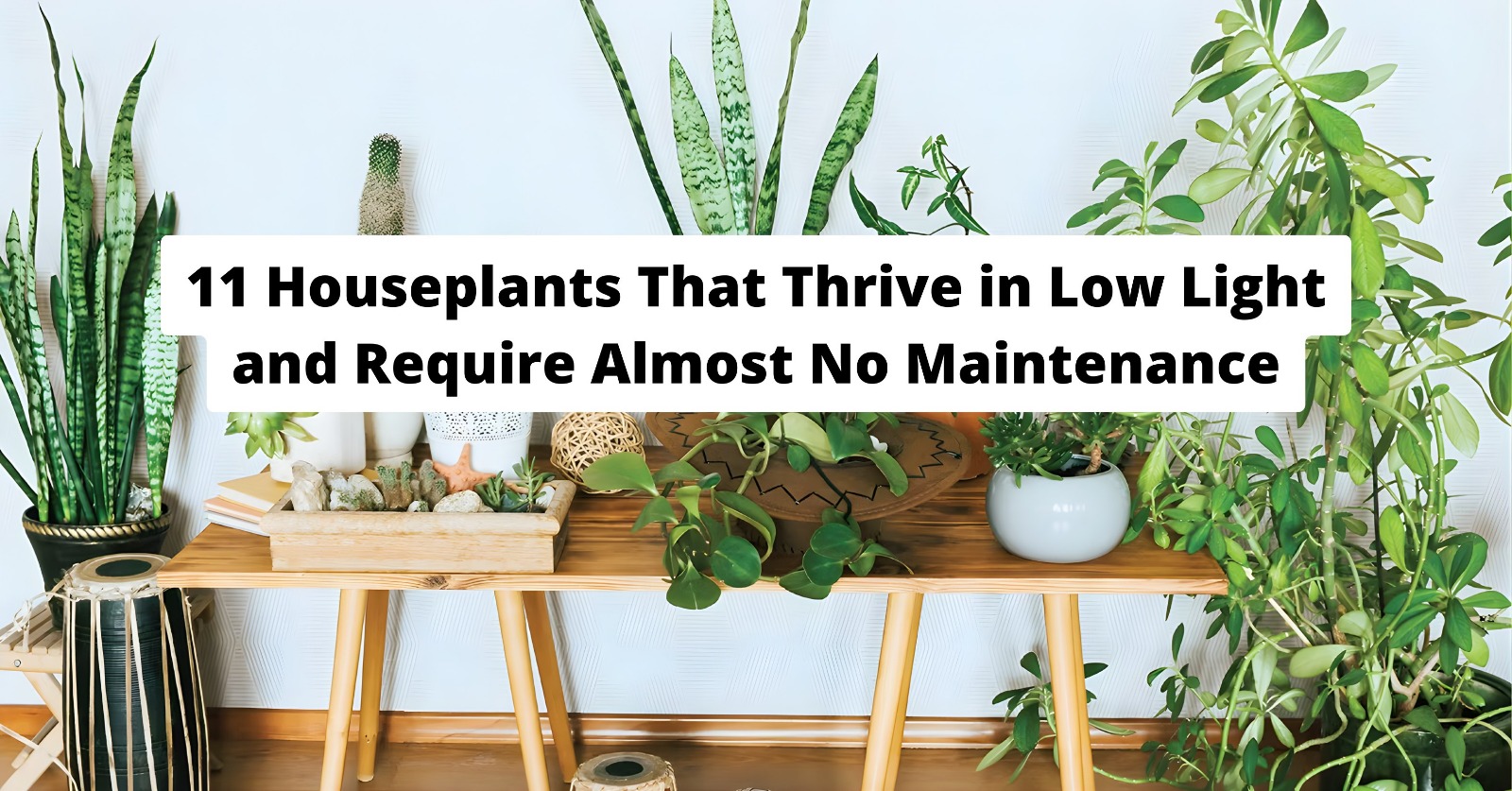
Most houses don’t have walls of windows and tons of sunlight coming in. North facing apartments, rooms in the middle of a house, offices with those bright fluorescent lights, and hallways that are far from windows are places where the majority of houseplants will struggle. But a lot of lovely, simple to look after plants don’t just put up with being in the shade, they are happiest in it. These plants originally grew on the forest floor under thick leaves, where the sun hardly ever shone directly and they absolutely needed to get used to not much light to live. So if you’ve repeatedly failed to keep a plant alive in a darker room, these types of plants might finally be what you need for some green success.
1. Snake Plant (Sansevieria / Dracaena trifasciata)
You’d have to really try to kill a snake plant inside. They can put up with very little light, lots of light, not being watered often, or being forgotten about for a long time, and they won’t seem to mind at all. Their stiff, visually striking leaves make a room taller and more organized and they are available in a lot of different kinds: you can find very tall ones with dark green leaves, or much smaller, roundish types. NASA studies have shown snake plants are some of the best houseplants for cleaning the air. And generally, if you wait for the soil to be totally dry and water them every two or three weeks, they’ll do well, even if they aren’t in a super bright spot.
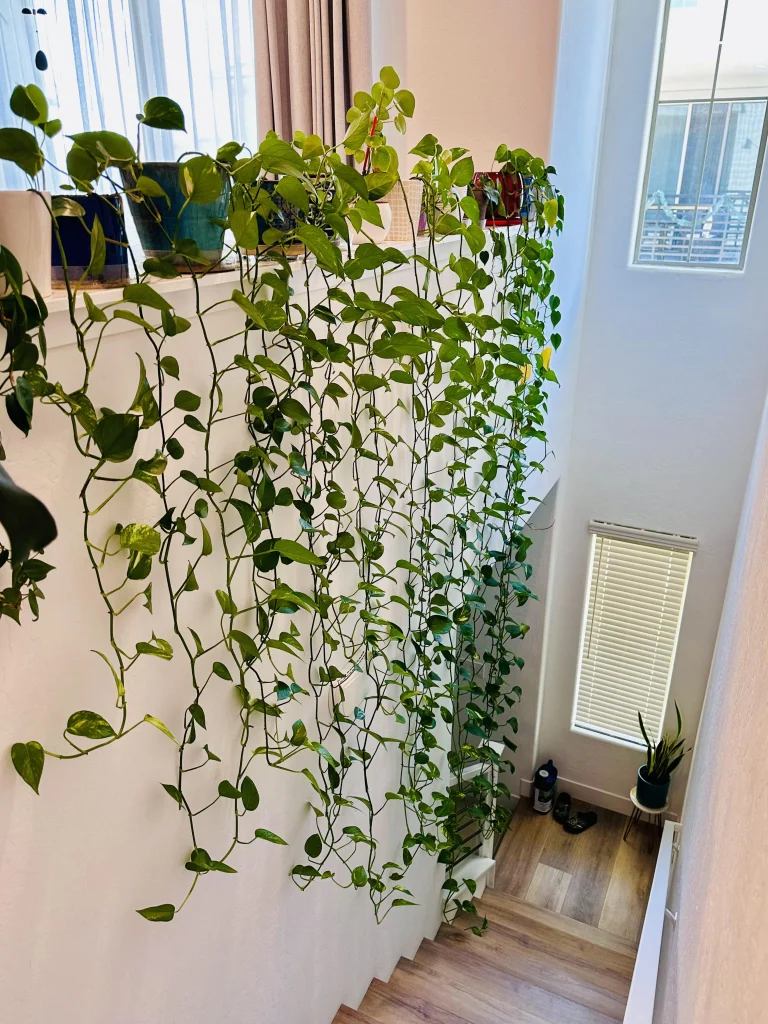
2. Pothos (Epipremnum aureum)
Many people suggest pothos if you have a dark room, because it will happily thrive where most houseplants would die – even in rooms lit only by fluorescent lights. Its long, cascading stems get quite long and are perfect for on shelves, in hanging baskets or if you want to guide them to grow along walls. There are lots of types of pothos, and they have different colored leaves: golden pothos is green and yellow, marble queen is green and white, and neon pothos is a bright yellow-green. If it’s extremely dark, the colorful sorts of pothos might go all green to get the most from the little light there is, but even then they are still doing well and looking good.
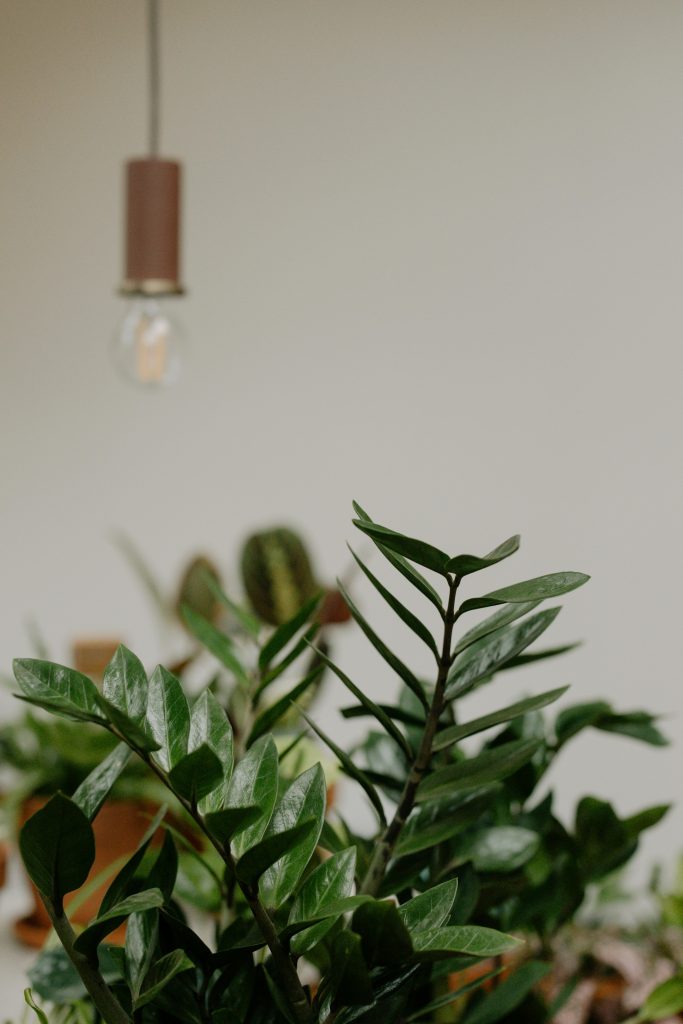
3. ZZ Plant (Zamioculcas zamiifolia)
ZZ plants have lovely, thick, waxy leaves that are a very dark green and they really do look as if they’re plastic – and they need about as much looking after. Because of their fat rhizomes, which are stems under the soil, ZZ plants hold onto water and can go for ages without needing a drink. They’ll happily exist in quite dim conditions that would be too much for most plants, plus you hardly ever get pests on them inside. Truly, the only way you will easily get a ZZ plant to die is by watering it too much, all the time, so they’re perfect for people who often don’t think about their houseplants for a long while.
4. Cast Iron Plant (Aspidistra elatior)
Because it’s amazingly hard to kill, the cast iron plant was very popular with people growing plants inside during the Victorian period and is still one of the strongest houseplants you can get. It bounces back from not much light, temperatures that go up and down, bad dirt, and forgetting to water it. The long, dark green leaves don’t grow quickly but stay good to look at all year; you don’t have to cut them, give them plant food, or do anything special. It does especially well in hallways, at the front door, and in other areas where almost nothing else will live.
5. Peace Lily (Spathiphyllum)
Peace lilies are a handful of flowering houseplants you can depend on to blossom even if they don’t get much light. Their lovely white flowers, which are actually specially formed leaves (called spathes) show up a couple of times a year without you needing to give them any extra sunshine. What’s more, peace lilies are great for people new to plants as they clearly show when they need a drink – they droop and then get their strength back within a few hours of being watered. This gives a nice, obvious signal to help you get a feel for how much water they like. They’re happiest in soil that is regularly moist, but not waterlogged, and they enjoy a little spray of water in dry rooms.
6-11: More Low-Light Champions
Lots of other plants do really well in low light, not just the top five. Chinese evergreens (Aglaonema) manage to show off colourful patterns on their leaves, even when the room isn’t very bright. Dracaena, especially the corn plant (Dracaena fragrans) and the dragon tree (Dracaena marginata) will give height and a tropical feel to darker spots. The parlour palm (Chamaedorea elegans) has lovely, soft, feathery fronds which will make a room more cheerful. You get a trailing style of growth, with heart-shaped leaves, from the heart-leaf philodendron (Philodendron hederaceum) and it’s similar to pothos. Spider plants (Chlorophytum comosum) will survive in dim conditions and create lots of hanging ‘babies’ you can use to start new plants. And the prayer plant (Maranta leuconeura) is pretty special as its leaves noticeably fold up at night, and it likes the sort of light you’d usually get inside a building.
Key Takeaway
You can still have lovely, healthy houseplants even if your place is dim. Plants like snake plants, pothos, ZZ plants, cast iron plants, peace lilies, Chinese evergreens, dracaenas, parlor palms, philodendrons, spider plants, and prayer plants originally grew on the forest floor, where they didn’t get a lot of sunshine. And because most of these are pretty good at handling not being watered regularly, they’re great for people who don’t have a ton of light or a very reliable schedule for watering. The most important thing for having success with indoor plants is choosing a plant for how much light you actually have in a room, instead of just assuming a sun-loving plant will be okay.
Leave a Reply