

You can get houseplant tips all over the place – on social media, at the garden store, or from friends who mean well, but a lot of it isn’t true. Many common “rules” for houseplants are either so basic they trick you, come from old information, or are just incorrect. Experts in plant science and professional gardeners have explained these incorrect ideas many times, and yet they stick around. That’s because they seem to make sense and are easy to recall. Understanding what is true and false about plants allows you to look after them more successfully and not do things that will damage the plants you’re attempting to nurture.
1. Myth: Misting Houseplants Increases Humidity
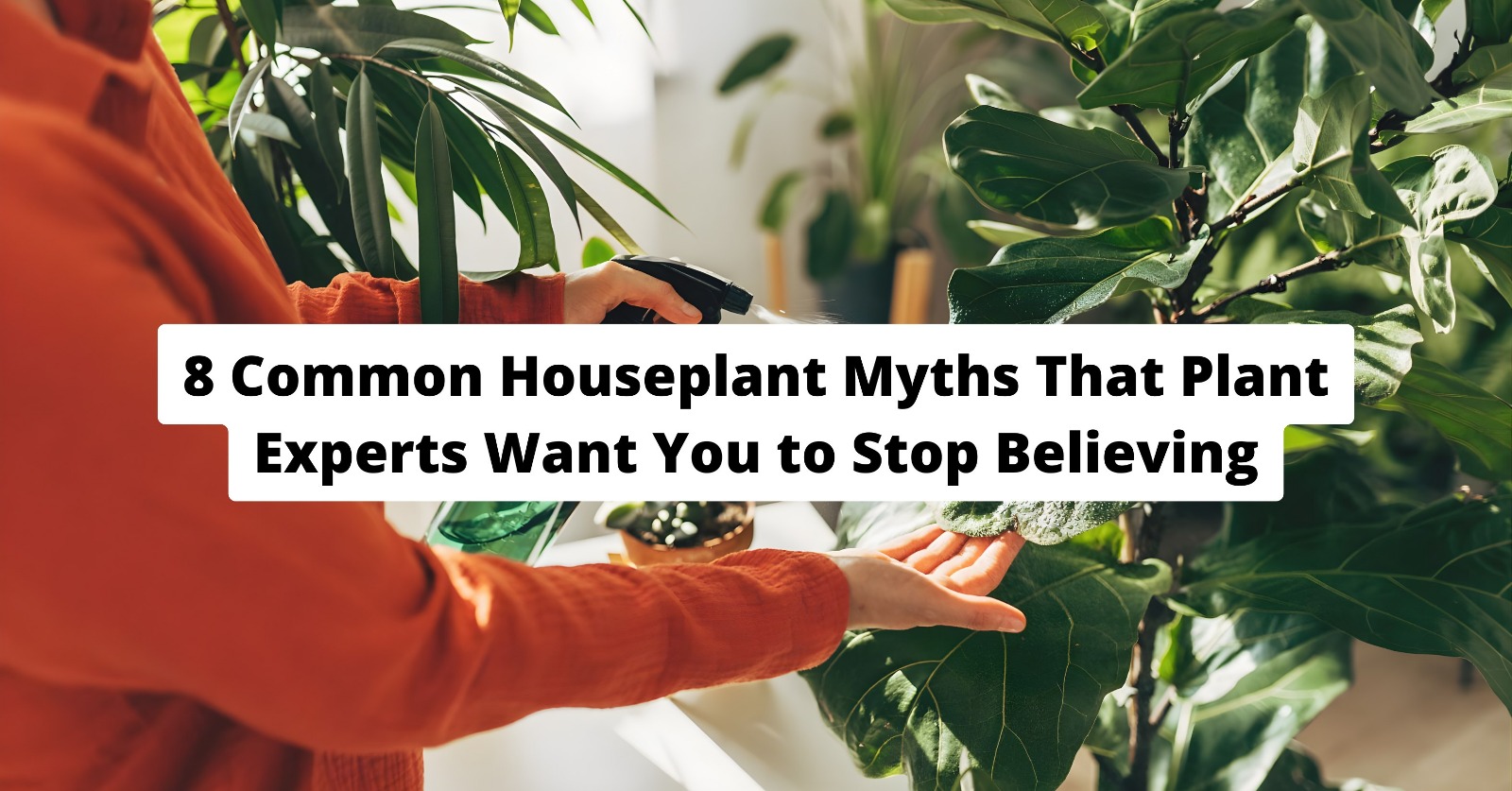
Lots of people who grow tropical plants inside think that spraying them with water from a mister really boosts the humidity around them. However, this is a very common mistake in houseplant care. Studies of how humidity works inside show that the water from misting disappears in just a few minutes and gives a tiny, super quick bump in humidity, you really won’t even notice it. If you want to get humidity up for houseplants, you could bunch your plants together (all their leaves releasing water vapor will make a humid little area), put the pots on trays of stones and water (as the water disappears it will humidify the air right above the plants), or get an electric humidifier. Misting won’t hurt most plants, but it won’t be anything like the humidity you’d find in the tropics.
2. Myth: Ice Cubes Are a Good Way to Water Orchids
Lots of people suggest putting a few ice cubes on orchid bark and letting them melt to give the plant water, and the idea is to avoid giving it too much. Yet orchids are from the tropics, and shockingly cold water right on the roots can actually damage the root’s insides. A better method for watering is to pour water at normal room temperature all the way through the orchid’s soil (the “potting medium”) for fifteen to twenty seconds, then make sure all the excess water flows out. This way the roots get a good soaking but won’t be harmed by a sudden chill.
3. Myth: Yellow Leaves Always Mean Overwatering
Lots of people think yellowing leaves on indoor plants are because of giving them too much water, and that’s certainly what happens most of the time. However, a lack of light, leaves just getting old, plants not getting the food they need, temperatures that are too hot or too cold, or being crammed into a pot with too many roots are all things that will turn leaves yellow in different ways. So, instead of immediately thinking about the water and altering how much you give, you have to look at which leaves are turning yellow, how the yellowing is happening, and what the soil and light are like to figure out the problem.
4. Myth: All Houseplants Clean the Air
That famous NASA Clean Air Study from 1989 found some houseplants can get rid of volatile organic compounds (or VOCs) from air in completely closed rooms. But later studies have revealed that houseplants don’t really clean the air in a normal house or office, where air circulates, exchanges with outside air, and there’s a lot more of it. Drexel University scientists have worked out that you’d need hundreds of plants for every square foot of space to actually make a noticeable difference to air quality. Houseplants absolutely are good for you, providing beauty, lowering stress, and adding moisture to the air through transpiration. But thinking of them as air cleaners in a typical home is giving them far too much credit.
5. Myth: Putting Rocks in the Bottom of a Pot Improves Drainage
Lots of people have long put a layer of gravel or stones in the bottom of a plant pot before the soil, but surprisingly, studies by soil experts show this doesn’t help drainage – in fact, it makes it worse. When water moves through soil, it forms a “perched water table” where the soil and gravel meet. Basically, the soil will be entirely soaked before water even starts to go down into the gravel underneath, and your plant’s roots will be in heavier, more waterlogged soil than if the pot was filled only with potting mix and had drainage holes at the bottom. For good drainage, use a potting mix that drains easily, something with perlite or bark included, a pot with plenty of drainage holes, and absolutely don’t use a gravel layer.
6. Myth: Talking to Plants Makes Them Grow Better
It’s nice to imagine a plant parent having a heartening conversation with their ficus, but there isn’t much in the way of solid scientific proof that plants benefit directly from us talking to them. A few studies have seen plants that ‘hear’ sound waves grow a tiny bit more, yet this is because the actual shaking of the stems from the sound (much as a breeze does) somehow encourages them to grow, not because they understand what we say. Someone has also suggested the carbon dioxide we breathe out during talking might help, but we don’t release nearly enough of it in conversation for it to really make a difference to their growth. That said, talking to plants is good for us and therefore for them; people who chat to their plants are usually closer to them, spot when things are going wrong sooner, and generally give them a lot more care.
7. Myth: Succulents Need Very Little Water
Just because succulents can handle a lack of water doesn’t mean they can survive without it at all. Lots of people are told they “hardly ever need water”, and because of that, they don’t water them often enough. The plants then slowly, slowly dry out and die. This is a gradual thing, they don’t dramatically wilt; it can even take months. While they are growing (in spring and summer), most succulents will be happiest with a good soaking every one to two weeks, but only when the soil is bone dry. During the winter when they’re resting, a watering about once a month is generally enough. Importantly, the trick is to water infrequently, but when you do, to thoroughly saturate the soil and then to let it all dry out before you water again. It’s not about ignoring them as the idea of ‘almost never watering’ would have you believe.
8. Myth: Repot Houseplants Every Year
Lots of houseplants don’t need to be repotted every year, and in fact, doing so can even hurt them. Plants like snake plants, ZZ plants, peace lilies and a lot of succulents will flower more and develop nicely if their roots have filled the pot. Repotting too often disturbs the roots, gives them a new soil mix which holds water in a different way, and can really bother plants that like things to stay the same. You should only repot when you can see the plant needs it – if roots are poking out of the bottom, water goes straight through and doesn’t soak in, or it’s not getting much bigger – not just because it’s been a year.
Key Takeaway
Lots of frequent ideas about houseplants – things like the pointlessness of misting them, or the fact that putting stones in the bottom of a pot doesn’t help with drainage (and can even make it worse) – stick around because they seem to make sense and people keep saying them. Knowing what’s actually happening with plants and how they need to be looked after means you won’t waste time on things that don’t do anything (misting, watering with ice cubes, adding a layer of gravel) and you can use techniques that truly help your plants be stronger (using humidifiers or keeping plants together, watering with water that isn’t too cold or too hot, and a soil that water can flow through easily). Plants do best when they’re cared for correctly, not by following old stories.
Leave a Reply