
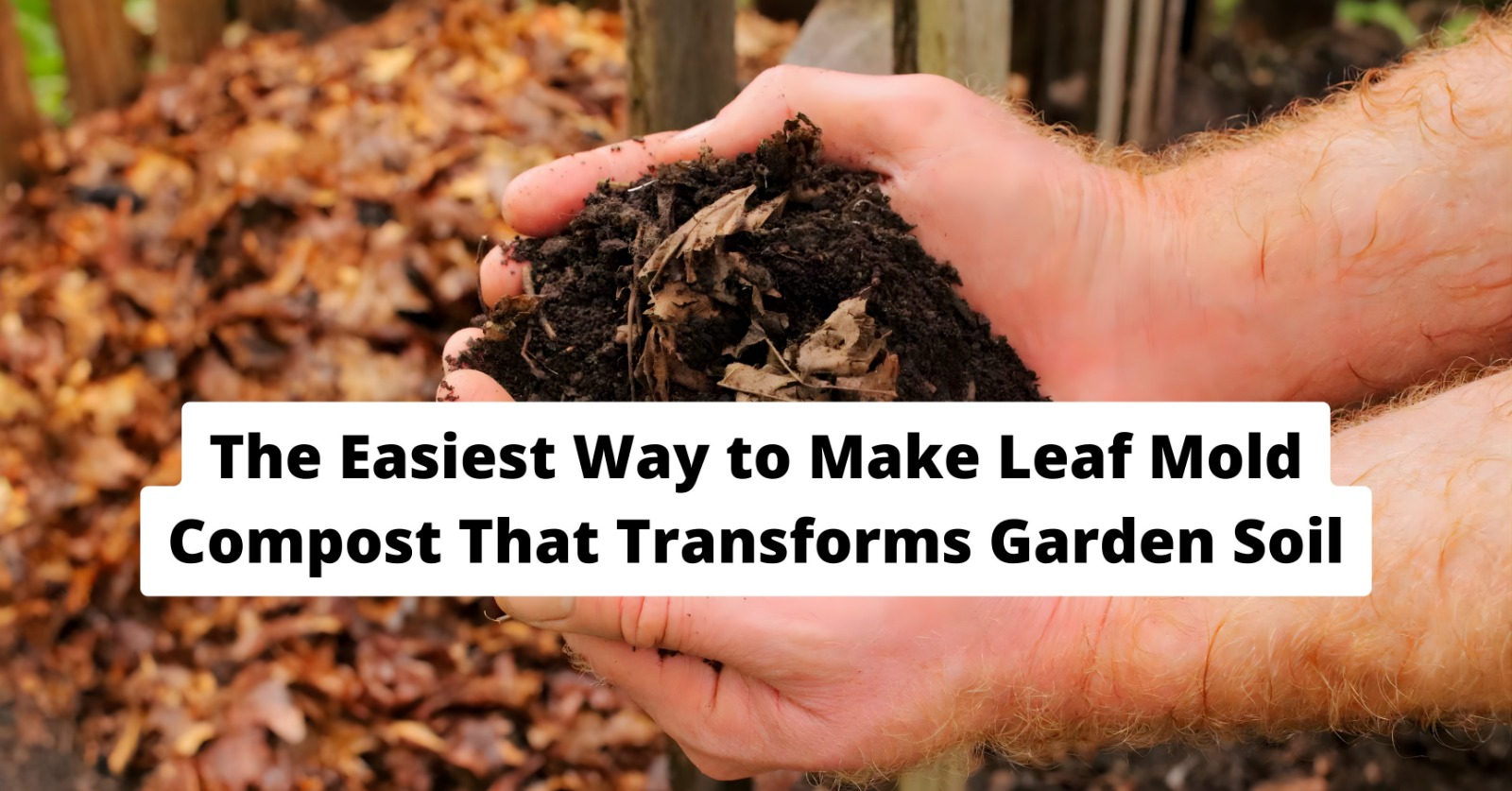
Each fall, people who own homes collect millions of tons of leaves and get rid of them, and in doing so they’re unknowingly getting rid of something really good for your garden. Leaf mold is what you get when leaves slowly break down; it’s dark and falls apart into little pieces and gardeners who have been doing this a while really like it because it makes the soil better, helps it hold onto water, and is a good home for things in the soil that are helpful. It isn’t like regular compost, with its need for carefully mixing ‘green’ and ‘brown’ bits and a lot of stirring. Essentially, to make leaf mold you just get the leaves in a pile, keep them contained, and be patient.
What Leaf Mold Does for Garden Soil
Leaf mold is best thought of as something to improve your soil with, not really as a plant food. It doesn’t have a ton of nutrients when you compare it to good compost, but what it does do to the soil itself is amazing. University of California and other extension service testing has found that leaf mold can allow soil to hold fifty percent or even more extra water. That’s really helpful for sandy soil which loses water so rapidly. And in heavy clay, which tends to get waterlogged, it’s leaf mold’s ability to create space between the bits of clay that improves both how air gets to the roots and how well the water drains. Importantly, earthworms, good fungi, and lots of other creatures in the soil eat leaf mold and these are the things that build healthy, stable soil over time.
The Bag Method: The Simplest Approach
If you want to make leaf mold quickly and without taking up a lot of room, using black garbage bags is the best way to go. Collect the leaves from the ground, and if you can, run them over with a lawnmower first. This makes them break down more rapidly. Then, firmly pack the leaves into large black plastic bags. If the leaves are very dry, pour a couple of cups of water into each bag, and seal the bag up. But, don’t completely block the air – poke a few little holes in the sides for ventilation. Place the sealed bags somewhere you won’t have to move them for twelve to eighteen months. After that time, when you open the bag, the dry, crispy leaves will have turned into dark, crumbly leaf mold. It will smell lovely and like the ground in a forest.
The Wire Bin Method: Larger Quantities
If you have a lot of leaves to deal with, you can easily make a container for composting with a four-foot section of wire fencing. Bend the fencing into a round cylinder and use zip ties to hold the shape. Then, just heap the leaves into the cylinder and if they’re dry, give them a sprinkling of water. After that you just leave them to rot. Because it’s open to the air, rain will generally keep the pile damp, but if it doesn’t rain for a while you can add water to help it decompose more quickly. These wire containers will hold an awful lot of leaves – fifteen, perhaps twenty bags worth – and will give you a big amount of lovely, finished leaf mould. However, they take much longer to work, usually from a year and a half to two years, because it doesn’t get as hot inside as when leaves are in a sealed bag.
How to Speed Up the Process
If you want leaf mold to happen quickly, chopping up the leaves first is the very best thing you can do. Leaves that are whole will take two years, or even longer, to fall apart. However, shredded leaves can be ready in six to nine months. Going over a heap of leaves many times with a lawnmower, or with a leaf shredder designed for the job, breaks them down into smaller bits. This is because the fungi and bacteria that do the decomposing can get at a much larger area. You’ll also get quicker breakdown if you keep the leaf pile regularly moist (so it’s damp, but not sitting in water) and give it a turn every few months. But it will still work if you don’t do these things, they just speed it up.
Key Takeaway
Gardeners can really benefit from leaf mold, and it’s unbelievably easy to get. If you chop up leaves before putting them in bags or a container, they’ll break down about twice as quickly. Once it’s finished, leaf mold is fantastic for holding onto water in sandy soil, for lightening up thick clay, and for providing food to the life in the soil that helps your garden grow, consistently. Every fall, beginning a new pile means you’ll always have a source of soil improver for nothing.
Leave a Reply