

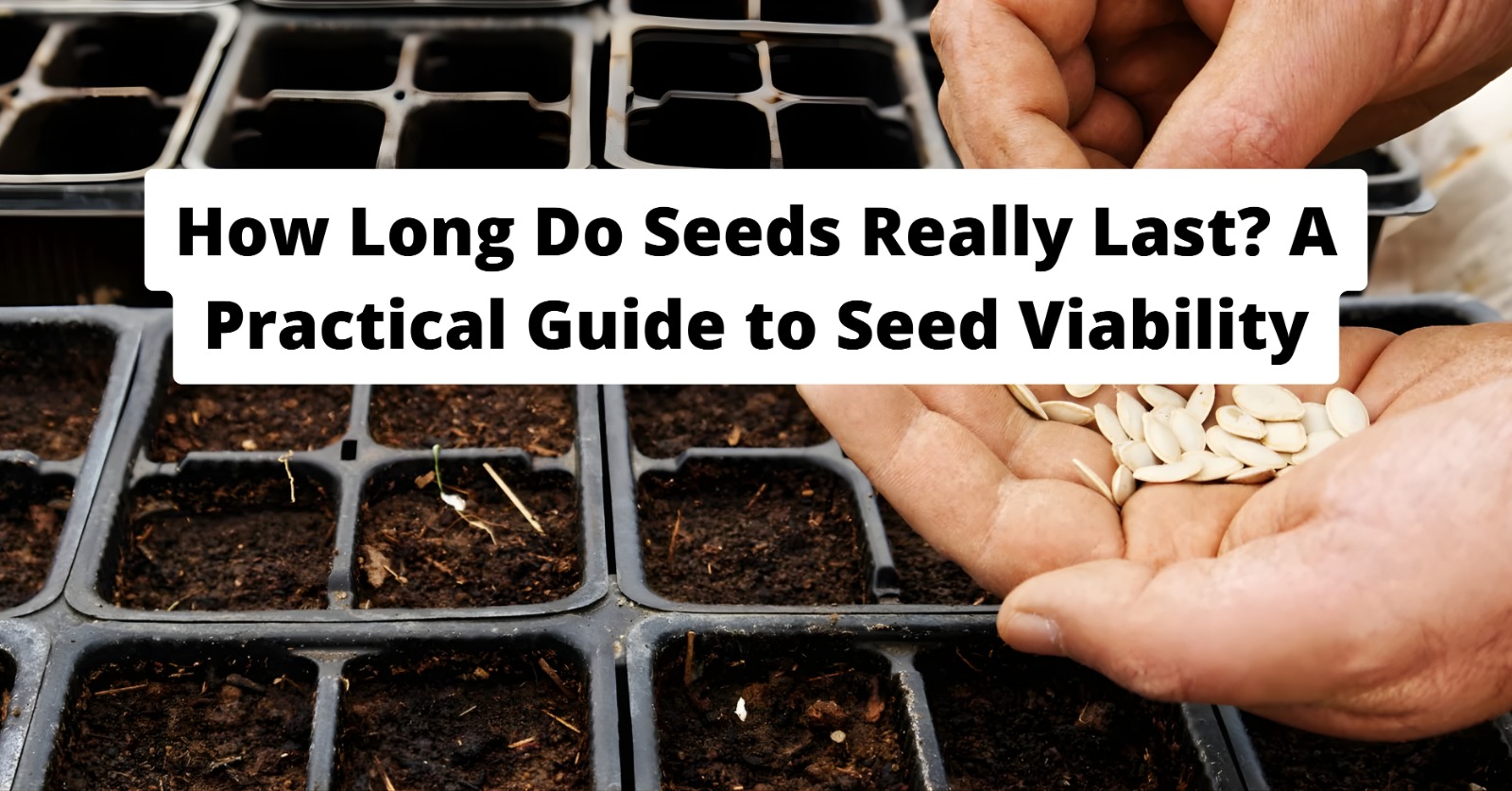
If you’re a gardener and hold onto seed packets from year to year, you’ll eventually wonder if those old seeds are still good to plant. Whether they are depends on the kind of seed, how they were kept, and how long ago you bought the packet. No seed lasts for all time, but a lot of typical vegetables and flower seeds can be used for much longer than most gardeners think. Throwing them out too soon is wasteful, and you’re getting rid of good potential plants.
‘Seed viability’ is just how many seeds in a group will actually start to grow if they are in a good environment. Seeds from a trustworthy supplier that are new usually have over 85 percent of them sprouting. But as seeds get older, this number goes down at different speeds for each type. Some will have a lot fewer that grow in a year or two, but others will happily sprout after ten or even more years of being stored properly.
Short-Lived Seeds: Use Within 1 to 2 Years
Some vegetable seeds don’t stay good for long, no matter how you keep them. Onion and leek seeds are especially known for quickly losing their ability to sprout, usually after only a year or two, and then very few will grow. Most people who really know about seeds say to buy parsnip seeds every year, as they don’t last much longer. Both corn and sweet corn get bad quickly, and are at their best if used within two years. Parsley and chives, herbs both, are also in this ‘use them quickly’ group, with only half as many seeds sprouting after being stored for two years.
Medium-Lived Seeds: Viable for 3 to 5 Years
Most of the seeds you’ll find for your garden are good for planting for three to five years if you store them correctly. This applies to beans, peas, carrots, beets, peppers, broccoli, cabbage, cauliflower, kale, spinach, squash, pumpkins, and a lot of flowers. Tomato seeds are especially good at lasting, frequently sprouting well for four or five years. And you can usually count on four to six years of usability from cucumber and melon seeds when they’re stored in a good way.
Long-Lived Seeds: 6 Years and Beyond
Some vegetable seeds will stay good for a really long time. If you keep them as they should be, lettuce seeds will grow into plants for at least six years. Watermelon seeds have even been known to sprout after being stored for eight years. Radish seeds usually are good for five or six years. Brassicas and cucurbits (that’s your cabbage family and things like squash and melons) are usually the longest-lasting in a typical garden; in fact, some gardeners have gotten seeds to grow after a ten year wait if everything was perfect for the seeds.
How to Store Seeds for Maximum Lifespan
Moisture and heat are what most often ruin stored seeds. You want to keep seeds in something completely sealed – a glass jar with a tight top, a zip-top plastic bag with all the air pushed out, or a sealed plastic container are good choices. They should then be in a dark and cool spot. Ideally, the temperature will be between 32 and 50 degrees Fahrenheit and a fridge is perfect for keeping them long term. A little packet of silica gel inside with the seeds will soak up any last bits of moisture. Seeds left at room temperature in dampness can lose their ability to grow two or even three times as quickly as seeds in a cool, dry place.

How to Test Old Seeds Before Planting
If you have seeds and aren’t sure how old they are, it’s a good idea to do a quick test to see if they will actually grow before you use valuable space in the garden. Put ten seeds between two damp paper towels, put those in a plastic bag and seal it up, and then somewhere warm (between 70 and 75 degrees Fahrenheit) for however many days it normally takes seeds of that kind of plant to start growing. Once that amount of time has passed, see how many seeds have sprouted. Seven or more coming up means they’re still really good to use. Four to six that sprout mean you can still plant them, but put down more seeds than you normally would. But if fewer than four sprout, you should just throw the whole lot away.
Key Takeaway
Generally, you can keep most garden seeds for three to five years if you store them in a place that’s cool, dry and with no air getting in. However, onion, parsnip and corn seeds are different; you really should get new ones every year. Before you start planting, doing a germination test with ten seeds on a damp paper towel is a good way to see if they will actually grow. This prevents you from being disappointed and losing valuable time and room in your garden on seeds that won’t sprout.
Leave a Reply