Why Tomato Leaves Curl-5 Common Causes and What to Do About Each One
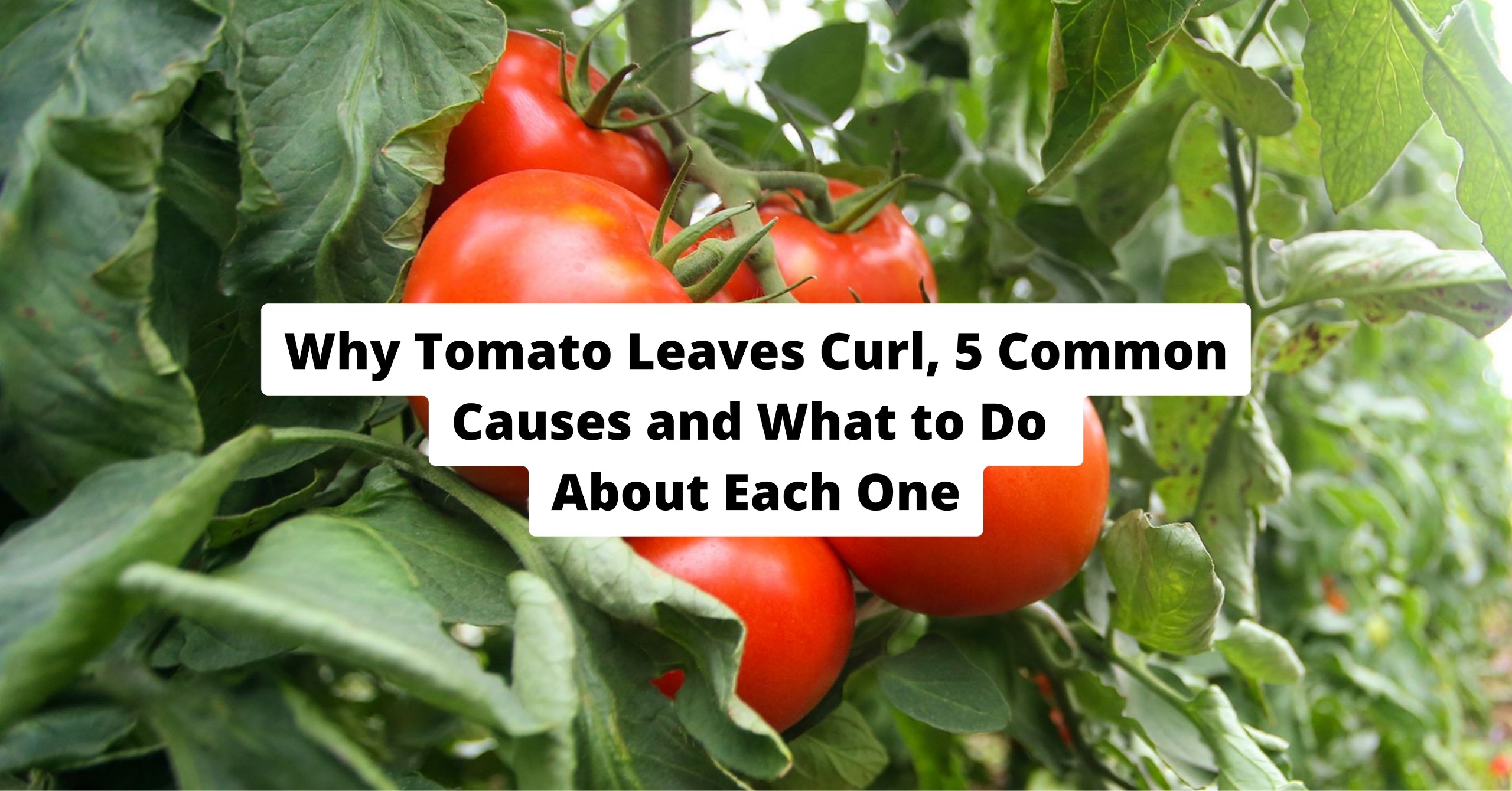
Tomato gardeners get worried when their tomato plant leaves start curling, and it’s easy to see why. Tomatoes are what most people really look forward to, and spend a lot of time caring for, in their kitchen garden. When leaves roll in on themselves, or turn up into a cup shape, or twist down, you instantly think of sickness, bugs, or losing all your tomatoes. However, experts in plant diseases say tomato leaf curl has at least five different reasons for happening. Most of these aren’t a big deal or are pretty simple to fix, and only one is a really serious danger to the plant. If you figure out exactly how the leaf is curling and what causes that particular kind of curl, you won’t worry for nothing and will know the best thing to do.
1. Physiological Leaf Roll: The Most Common and Least Concerning
What causes tomato leaves to curl up the majority of the time is physiological leaf roll. Essentially, when the lower leaves are stressed, they roll in on themselves from edge to edge to make a tube. This happens most often when the plant is growing quickly, has lots of tomatoes developing, has been given too much nitrogen, or has been heavily pruned. These rolled leaves will feel quite thick and a little tough, yet they stay green and are otherwise perfectly fine. Plant experts think the plant does this to limit how much leaf area is out in the sun and breeze, especially when it is losing a lot of water.
Physiological leaf roll won’t impact how many tomatoes you get, it isn’t contagious to other plants, and you don’t need to do anything to fix it. It’s something you’ll see more with tomatoes that grow as a vine (indeterminate types), and it will often go away by itself as the weather and how the plant is doing gets to be more consistent. If the curl is all over the plant, but the leaves are green, firm, and don’t have bugs on them, physiological leaf roll is almost certainly what is going on.
2. Water Stress: Both Too Much and Too Little
When tomatoes don’t have the right amount of water, their leaves will curl. Surprisingly, this happens whether they have too little or way too much; the effect on the leaves looks pretty much the same. Tomato leaves that are drying out from lack of water usually curl upwards and in on themselves and become dry and crunchy around the edges. The plant does this to try to lose less water by having less of the leaf out in the air. If tomato plants get too much water, the leaves curl downwards, look swollen and full of water, and begin to turn yellow starting at the bottom and going up. You can tell which problem you have almost immediately by how moist the soil is when you stick your finger in two or three inches. If it’s dry, it’s drought; if it’s very wet, you’re overwatering. Using drip irrigation and a layer of mulch to give a steady, consistent amount of water will stop both kinds of leaf curling caused by water.
3. Herbicide Drift Damage
Tomato plants are amazingly affected by any herbicide left behind, much more than most things you’d grow in a garden. Really small amounts of weed killers for broadleaf plants (like 2,4-D and dicamba) that blow over from someone treating their lawn nearby can dramatically change the shape of the leaves. They twist, cup upwards, get long and thin, and curl in ways that are noticeably unlike damage from other issues. This harm will generally show up within a day or two of the plants being exposed, and the newest leaves are the ones that are worst hit. Leaves that have been damaged by herbicide become oddly long and thin, and their lines look very obvious and all out of shape. If plants on just one part of your garden are doing this – the part which faces a lawn or field which has recently had something sprayed – then the weed killer has probably blown onto them. Plants that haven’t been too badly exposed might get better, but if it was a lot of herbicide, you can expect a much smaller crop.
4. Viral Infection: The Serious Concern
Tomato yellow leaf curl virus (TYLCV), and other similar viruses, makes leaves turn upwards, get yellow between the veins, and the plants don’t grow as well; they also make far fewer tomatoes. Unlike when leaves naturally roll upwards, this virus causes the whole plant to curl, and as they curl, the leaves turn yellow and their shape changes. Whiteflies spread these viruses, and sadly, you can’t get rid of the virus in a plant that has it. If you’re certain a plant has one of these viruses, you need to remove it and destroy it, to stop it from getting to your healthy plants. Where TYLCV is a problem, the best way to stop it is to control the number of whiteflies, using things like sticky traps, shiny mulch, and insecticidal soap.
5. Environmental Extremes: Heat, Wind, and Transplant Shock
When you first put tomato plants outside, their leaves often curl a bit while they get used to being in the open, and this is even more common if you didn’t slowly introduce them to outside conditions first. This curling from the move itself generally goes away in a week or two as the roots start to grow in the garden. Very high temperatures (over 95 degrees during the day) will also make leaves curl upwards for a little while, as the plant tries to deal with the heat, but the leaves will flatten out when it cools down. Continual, heavy wind can curl leaves because the plant is being physically pushed around. Importantly, all of these things – the move, the heat, the wind – will fix themselves and you just need to make sure the plant has enough water, some shade during really hot spells, and that you get your plants used to being outside gradually before putting them in the ground.
Key Takeaway
There are five main reasons why tomato leaves curl. The most frequent one, and it doesn’t do any harm, is just how the leaf grows. Leaves will also curl from a lack of water, but that is easily fixed by watering your tomatoes regularly. If people nearby have been treating their lawns with weed killer, that could be drifting onto your tomatoes. A virus is a less common, but quite bad, reason, and if leaves are affected by this, you should get rid of those plants. Lastly, very hot or cold weather can cause curling, but this will go away by itself. To figure out what’s going on, think about whether the curled leaves are still green, strong and generally good – in which case it’s nearly certainly nothing to worry about. Or are they yellowing, strangely shaped and not growing very well? Those are the symptoms that suggest a virus or the weedkiller.