
Squash and melon vines are some of the most space-demanding plants in a home vegetable garden. One winter squash plant can spread across 40 to 60 square feet, and melon vines can take up nearly as much room. For gardeners working with limited space, that kind of ground-level sprawl can make these crops seem impossible to grow. However, training squash and melons vertically on a trellis can reduce each plant’s footprint to just four to six square feet while also improving fruit quality, lowering disease pressure, and making harvest much easier.
Choosing the Right Trellis Structure
Growing squash and melons vertically requires a much stronger support than the lightweight trellises used for beans or cucumbers. A mature winter squash vine carrying several developing fruits can weigh 40 to 60 pounds, and the trellis must be strong enough to handle that weight along with wind throughout the growing season.
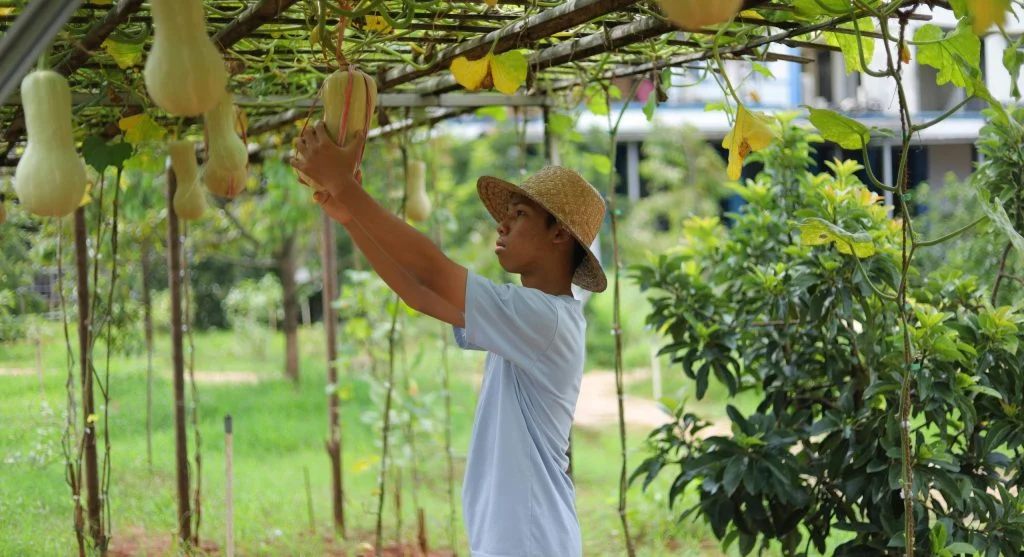
Cattle panels are considered the best option for heavy-vine trellising. These heavy-gauge welded wire panels are usually 16 feet long and 50 inches tall, and they are rigid, rust-resistant, and strong enough to support almost any cucurbit. Sturdy wooden A-frame structures, heavy-duty metal arches, or posts with horizontal wire spaced every 12 inches can also provide reliable support. Lightweight plastic netting and thin bamboo stakes are not suitable because they can collapse under the weight of developing squash and melons.
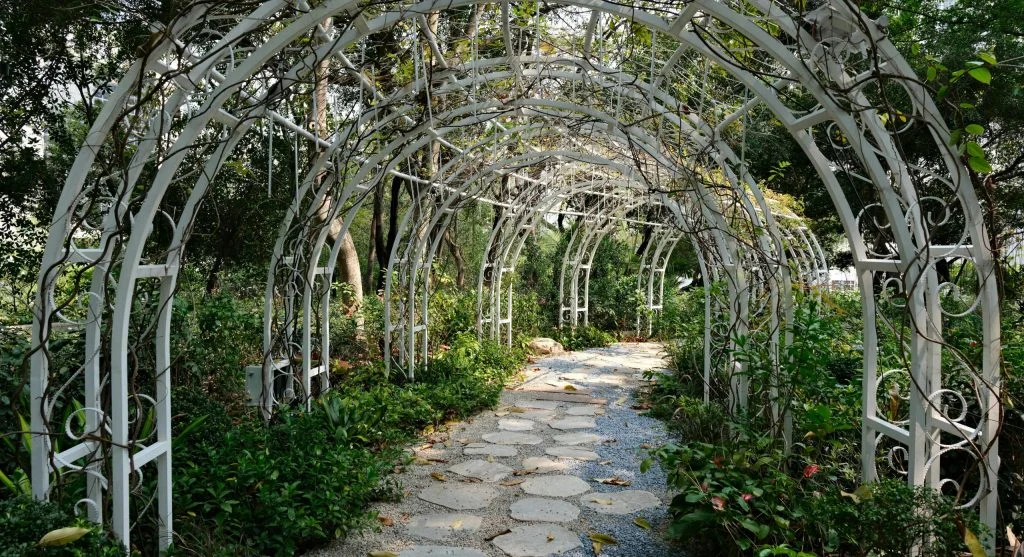
Credit: King Ho / Pexels
Training Vines Upward
Unlike pole beans, which naturally wrap themselves around vertical supports, squash and melon vines do not climb strongly on their own. They do produce tendrils that can grip nearby surfaces, but the heavy main vine still needs guidance to grow upward instead of spreading across the ground.
During the first three to four weeks after planting, gently weave the growing vine through the trellis openings or loosely tie it to the structure every 12 to 18 inches. Soft fabric strips, garden twine, or plant clips all work well for this. Once the vine reaches the top of the trellis and starts producing side branches, those lateral shoots can either cascade over and down the opposite side or be guided along the trellis to make better use of the available support.
Supporting Heavy Fruit
Small-fruited varieties, such as summer squash, small pie pumpkins, and personal-sized melons, usually hold their own weight on the vine without extra support. Larger varieties, including butternut squash, spaghetti squash, cantaloupes, and full-sized watermelons, need individual fruit slings to keep the developing fruit from tearing the vine or breaking the stem.
Fruit slings can be made from old t-shirt fabric, cheesecloth, mesh onion bags, or pantyhose. Tie both ends of the sling to the trellis frame so it cradles each fruit as it grows. The best time to add a sling is when the fruit is about the size of a softball. At that stage, the sling can begin supporting the weight before the fruit becomes heavy enough to cause damage.
Benefits Beyond Space Saving
Vertical growing offers more than just space savings. It can also improve fruit quality and overall plant health. Fruit hanging freely from a trellis tends to ripen more evenly because sunlight reaches all sides, instead of leaving a pale patch where the fruit rests on the ground.
Air circulation is also much better around vertically grown foliage than around vines sprawling across the soil. This helps reduce common cucurbit diseases such as powdery mildew, downy mildew, and fruit rot. Harvesting becomes simpler as well. The fruit is easier to see at eye level instead of being hidden beneath dense leaves on the ground, and gardeners do not have to step on vines or disturb the plant canopy to find and pick ripe fruit.