
Brown spots on plant leaves are one of the most common problems gardeners and houseplant owners notice. They are also one of the hardest symptoms to diagnose because several different issues can create brown discoloration that looks similar at first glance. Without knowing the exact cause, any treatment is mostly guesswork and may target the wrong problem while the real issue keeps getting worse. Plant pathologists diagnose brown spots by looking closely at the pattern, location, texture, and spread of the spots, along with the growing conditions the plant has been exposed to. These details help narrow down the cause and guide the right treatment.
1. Fungal Leaf Spot Diseases
Fungal infections are the most common cause of brown spots on outdoor garden plants. These spots usually begin small, about 1/8 to 1/4 inch wide, and are often roughly circular. Some develop concentric rings, creating a “bull’s-eye” pattern, and many form a yellow halo around the brown center. Over time, the spots may enlarge and merge into larger dead patches.
Fungal leaf spots spread most easily in wet conditions. Splashing rain, overhead watering, and humid weather all help move spores from leaf to leaf. Treatment includes removing and throwing away affected leaves, improving airflow around the plant, watering at the base instead of from above, and using a copper-based organic fungicide if the infection becomes severe.
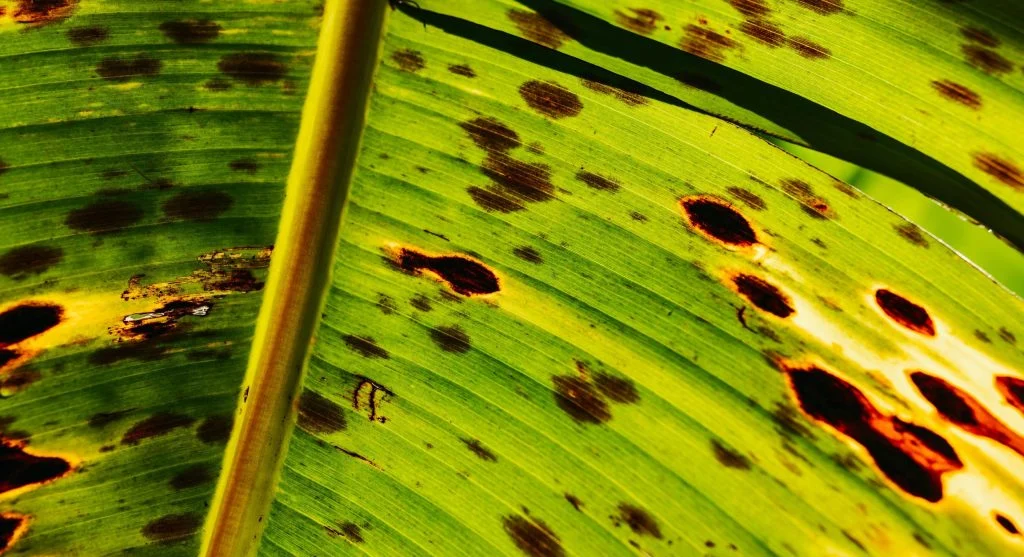
Credit: Jonathan Borba / Pexels
2. Bacterial Leaf Spot
Bacterial leaf spot looks different from fungal leaf spot in several important ways. The spots are usually angular because they follow the vein pattern of the leaf instead of forming round circles. When fresh, they may also look water-soaked or greasy, and they can develop a yellow halo.
Fungicides do not treat bacterial leaf spot. Management depends on removing affected leaves, avoiding overhead watering, and preventing spread by not working around plants when they are wet. Copper-based sprays may slow the spread of bacteria, but they cannot cure tissue that is already infected.
3. Sunburn and Heat Scorch
Plants that are suddenly moved from shade into full sun, or houseplants placed directly in a bright sunny window without adjustment, can develop brown, papery patches on the leaves exposed to the strongest light. Unlike disease spots, sunburn patches are usually large, irregular, and limited to the side of the plant facing the light source. They also do not continue spreading over time.
The damaged leaf tissue will not heal, but the plant can produce healthy new growth once the light level is reduced or moderated. Gradually acclimating plants to stronger light helps prevent future sunburn and heat scorch.
4. Overwatering and Root Stress
When roots are damaged by overwatering, root rot, or compacted soil, the plant struggles to move enough water and nutrients up to its leaves. Brown spots from root stress often appear first on older, lower leaves. They may also come with general yellowing and a soft, mushy texture at the base of the leaf or along the petiole, which is the leaf stem. The soil usually feels wet even though the plant may look like it needs water.
Improving drainage, watering less often, and treating any root rot can stop the problem from progressing, as long as the plant still has healthy root tissue remaining.
5. Fertilizer Burn
Too much fertilizer can cause brown, crispy spots and edges on leaves. This is especially common when concentrated granular or liquid fertilizer is applied too close to the plant or used at stronger-than-recommended rates. Excess fertilizer salts build up in the soil, damaging root cells and pulling moisture out of leaf tissue.
The damage often appears as brown leaf tips and edges rather than spots in the middle of the leaf. Flushing the soil with plenty of plain water helps dilute and wash away excess fertilizer salts. For potted plants, use two to three times the container volume. Reducing both fertilizer strength and frequency helps prevent the issue from returning.
6. Mineral Deficiency
Some nutrient deficiencies can also cause brown spotting that looks similar to disease. Potassium deficiency creates brown scorching along leaf edges, starting with older leaves. Calcium deficiency causes brown, dead spots at the tips of leaves and between the veins of new growth. Manganese deficiency leads to brown spots between the veins on younger leaves.
Because these symptoms can overlap with disease-related browning, a soil test is the most reliable way to confirm whether the problem is caused by nutrient deficiency or something else.
Credit: Jessica Lewis 🦋 thepaintedsquare / Pexels