
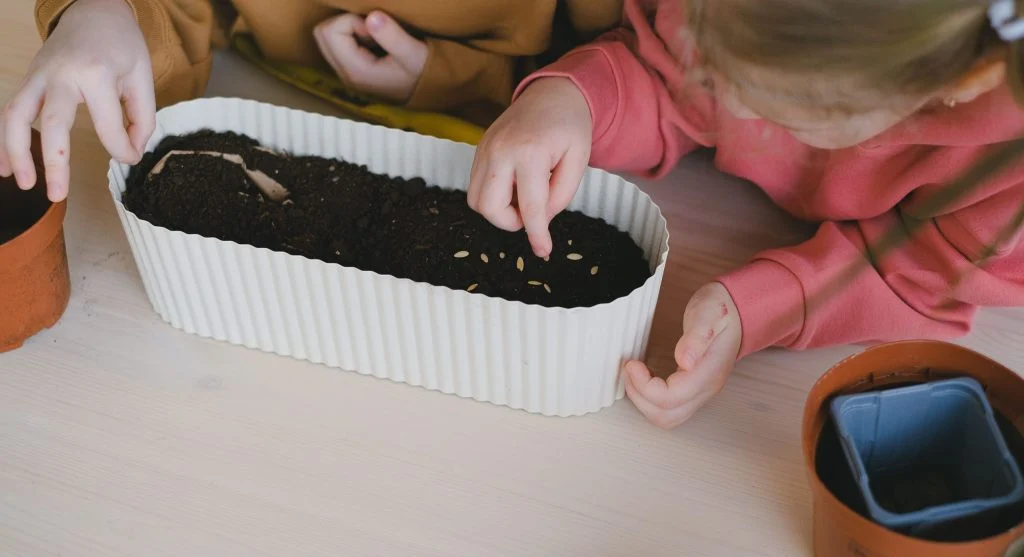
Gardening with children works best when the plants cooperate. That means choosing flowers that sprout quickly, show visible growth from day to day, tolerate the uneven watering and attention that young gardeners often provide, and produce results exciting enough to keep a child interested through the full growing cycle. Flowers that take three weeks to germinate, need exact moisture control, and bloom only briefly after a long season usually are not the best choices for children’s gardens. The following ten flowers have the traits child-development educators and gardening-with-kids specialists often recommend: large seeds that are easy to handle, fast and dependable germination, noticeable growth, tolerance for imperfect conditions, and bright blooms that appear soon enough to reward a child’s patience.
1. Sunflowers
Sunflowers are the classic children’s flower. The seeds are large enough for small hands to pick up and plant one at a time, germination usually happens within five to seven days, and the plants grow so quickly that children can measure real progress almost every day. Dwarf varieties such as Teddy Bear and Sunspot reach about two to three feet and work well in containers. Giant varieties such as Mammoth and Russian Giant can grow 8 to 12 feet tall, creating an exciting spectacle as children watch “their” plant rise above the adults in the household.
2. Nasturtiums
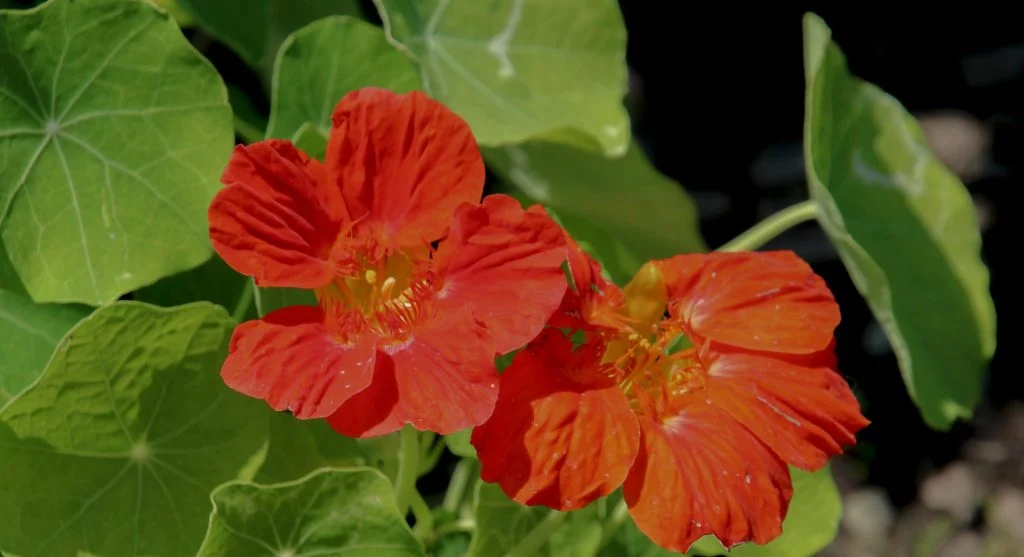
Nasturtium seeds are large, round, and simple for children to handle. They germinate in 7 to 10 days, grow quickly, and produce bright edible flowers in orange, red, and yellow within 50 to 60 days of planting. The whole plant, including the leaves, flowers, and immature seed pods, has a mild peppery flavor and can be added to salads. That makes nasturtiums both a gardening project and a cooking activity. They also grow well in poor soil and need very little care once established.
3. Marigolds
Marigold seeds germinate in five to seven days, grow into sturdy plants, and begin blooming within six to eight weeks. That gives children a complete seed-to-flower experience in a timeframe most can stay interested in. The bright orange and yellow flowers continue blooming until frost without needing deadheading, and the strongly scented foliage has the added benefit of helping repel some garden pests.
4. Zinnias
Zinnias are some of the most colorful and productive annual flowers, blooming in nearly every color except blue. The seeds germinate in four to seven days, and the plants usually begin flowering in 60 to 75 days. Zinnias also become more productive when cut. Picking blooms for indoor bouquets encourages the plant to grow even more flowers, which teaches children the satisfying cycle of growing, harvesting, and regrowing.
5. Morning Glories
Morning glory seeds benefit from soaking overnight before planting, which can become a fun hands-on activity for children. They usually germinate in five to seven days. The vines climb vigorously, reaching up to 10 feet in a single season, and can turn a simple trellis or fence into a wall of colorful trumpet-shaped flowers. Each bloom opens fresh in the morning and closes by afternoon, giving children a daily garden “show” to look for.
6. Cosmos
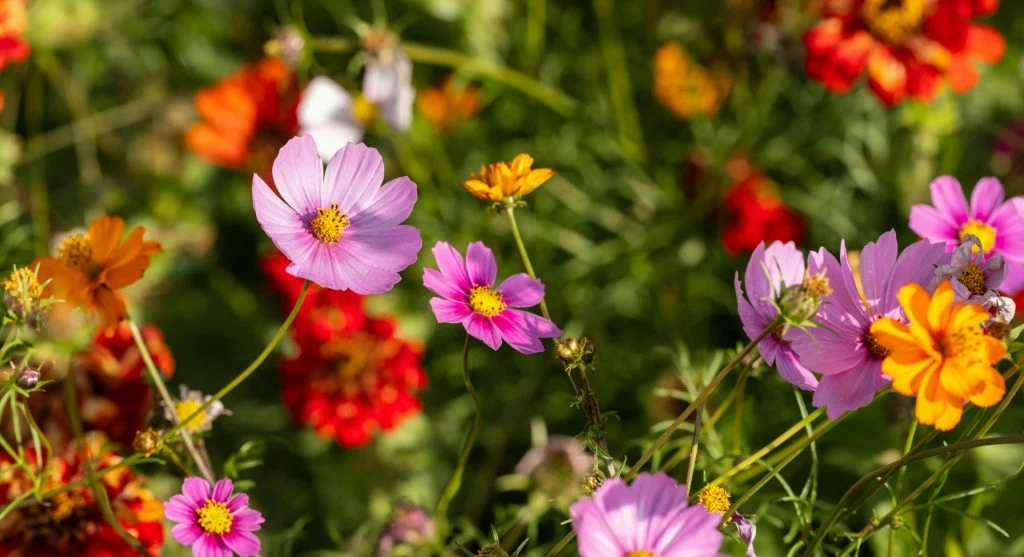
Cosmos are some of the easiest flowers to grow. They germinate readily, grow quickly, tolerate drought and poor soil, and produce airy daisy-like blooms in shades of pink, white, and deep magenta. The plants also attract butterflies, adding another nature-learning opportunity to the gardening experience.
7. Sweet Peas
Sweet peas produce large seeds that children can handle easily, along with fragrant flowers that offer more than just visual beauty. The climbing vines reach four to six feet and bloom heavily during cool weather. Sweet peas are cool-season flowers and should be planted in early spring. They decline once summer heat arrives, but before that, they can produce weeks of sweetly scented blooms.
8. Snapdragons
Snapdragon flowers open and close like a mouth when gently squeezed from the sides, a feature that reliably delights children. The plants come in dwarf, medium, and tall varieties, bloom in a wide range of colors, and can be started from seed indoors or sown directly outdoors. Snapdragons also tolerate cool weather and often keep blooming into fall.
9. Pansies and Violas
Pansies and violas produce cheerful “face” patterns on their petals, which often appeal to children. They are also among the first flowers that can be planted in early spring, helping extend the gardening season before the main summer garden begins. Both are edible and can be used as colorful cake decorations, adding another fun layer to the growing experience.
10. Four O’Clocks
Four o’clock flowers, also called Mirabilis jalapa, have a built-in clock. They open in the late afternoon, around 4 PM, stay open through the night, and close the following morning. This predictable daily habit often fascinates children and gives them a reason to visit the garden at a specific time each day. The seeds are large and round, germination is fast, and the plants are almost indestructible once established.