

Leaf propagation can feel almost magical. With the right plant, a single detached leaf can develop an entirely new root system, produce fresh growth, and eventually become a complete plant. What makes this process so remarkable is that the new plant develops using only the stored energy and genetic instructions contained within that one leaf.
Not every plant can be propagated this way in fact, most species cannot. However, several popular houseplants and succulents root so readily from leaf cuttings that the technique is often easier than traditional stem propagation. For gardeners and houseplant enthusiasts, it offers a simple, inexpensive way to multiply favorite plants with very little effort.
The Two Main Methods: Leaf-on-Soil and Leaf-in-Water
Leaf propagation generally relies on one of two methods, depending on the species being grown.
The first approach involves placing a leaf directly on moist soil. This method works particularly well for many succulents and some tropical plants. The leaf is either laid flat on the surface of damp potting mix or positioned upright with the cut end slightly inserted into the soil. Over the next few weeks, roots begin to emerge, followed by a tiny new plant developing at the base of the leaf.
The second method uses water propagation. In this case, the leaf’s petiole (the small stem that connects the leaf to the plant) is placed in water. This technique is commonly used for plants such as African violets and begonias. Roots usually appear within a few weeks, and eventually a small plantlet forms where the leaf and petiole meet.
8 Plant Species That Root Easily From Leaf Cuttings
1. Echeveria and Other Rosette Succulents
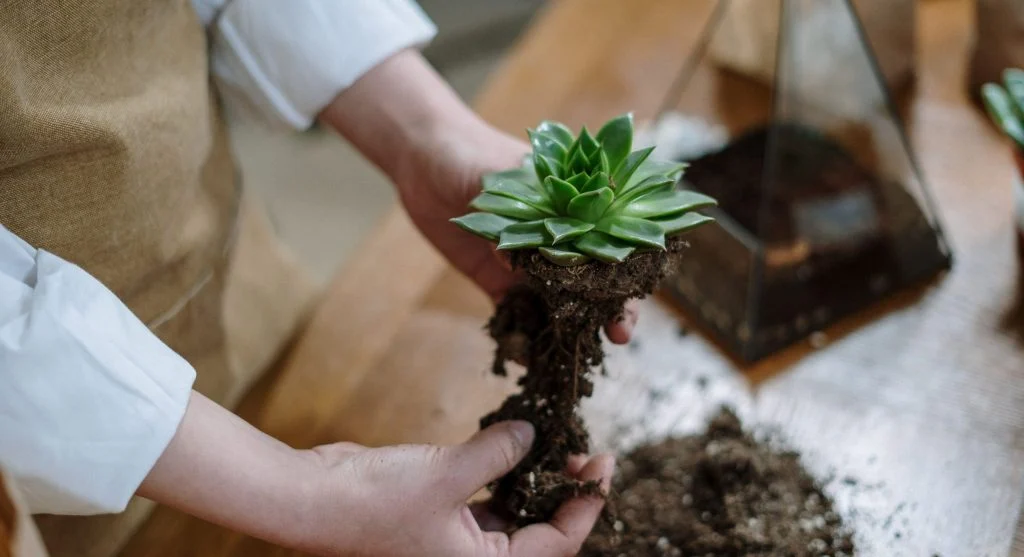
Echeverias are among the easiest plants to propagate from leaves.
Carefully twist a healthy leaf from the plant, making sure the entire base comes away cleanly. If part of the leaf remains attached to the stem, rooting is unlikely to occur. Allow the leaf to dry and callous for 24 to 48 hours before placing it on moist soil.
Within two to four weeks, small roots and a miniature rosette typically begin to form at the base of the leaf.
2. Jade Plant (*Crassula ovata*)
Jade plants root readily from individual leaves.
Choose a plump, healthy leaf and place it on moist soil. Some gardeners also insert the cut end slightly into the growing medium.
Roots and a small plantlet generally appear within three to six weeks, making jade one of the easiest houseplants to multiply.
3. African Violet (*Saintpaulia*)
African violets are classic candidates for leaf propagation.
Cut a healthy leaf with one to two inches of petiole attached. Place the petiole in water or insert it into moist vermiculite.
Roots often develop within two to four weeks. After six to twelve weeks, clusters of tiny new plants typically emerge from the base of the petiole.
4. Rex Begonia
Rex begonias offer more than one propagation option.
A leaf with a short petiole can be inserted directly into moist soil. Alternatively, the entire leaf can be laid flat on the soil surface after making small cuts across the major veins.
New plantlets often emerge from each cut point, allowing multiple plants to be produced from a single leaf.
5. Snake Plant (*Sansevieria*)
Snake plants can be propagated using leaf sections rather than whole leaves.
Cut a healthy leaf into segments about three to four inches long and allow the pieces to callous for approximately 24 hours before planting.
One critical detail is maintaining the original orientation of each segment. The bottom end must be inserted into the soil. If planted upside down, rooting will not occur.
Roots generally form within four to eight weeks, while new shoots may take eight to twelve weeks to appear.
6. Peperomia
Many peperomia varieties root easily from leaves.
Remove a healthy leaf while keeping the petiole attached. Place the petiole in moist soil or water and wait for roots to develop.
Root formation usually occurs within two to four weeks, while a small plantlet often appears after six to eight weeks.
7. Kalanchoe
Kalanchoe species are well known for their ability to reproduce from leaves.
Some species, particularly *Kalanchoe daigremontiana* (commonly called Mother of Thousands), naturally produce tiny plantlets along their leaf edges.
Other kalanchoe varieties root easily when leaves are placed on moist soil. New plants generally begin developing within three to six weeks.
8. String of Pearls (*Senecio rowleyanus*)
Although technically propagated from short stem sections, string of pearls roots so easily that it deserves a place on this list.
Lay a section of stem containing several pearls across moist soil and gently press it into contact with the surface.
Roots form from the nodes—the points where each pearl connects to the stem—within two to four weeks. Once established, the new plant grows quickly and develops attractive trailing stems.

Key Takeaway
Leaf propagation is an easy and cost-effective way to create new plants from a single detached leaf, provided the species is capable of this type of regeneration.
Popular choices include succulents such as echeveria, jade plant, and kalanchoe, as well as African violets, rex begonias, snake plants, peperomias, and string of pearls. Succulent leaves are typically placed on moist soil after a brief callousing period, while many tropical plants root through their petioles in water or a moist growing medium.
Depending on the species, visible results may appear anywhere from two to twelve weeks after propagation begins. For the best chance of success, start with a healthy leaf, maintain consistent moisture without overwatering, and provide bright, indirect light throughout the rooting process.