
Yellowing leaves on cucumber plants can worry any gardener, and for good reason. Cucumbers grow quickly and produce heavily, so they rely on a full, healthy canopy of leaves to power the photosynthesis needed for steady fruit production. When the leaves begin to yellow, the plant has less energy to work with, fruit development slows, and overall yield can drop. But yellow cucumber leaves can be caused by at least six different problems, and the right fix depends completely on the actual cause. Treating a watering issue with fertilizer, or responding to disease by adding more water, wastes valuable time and can make the plant decline faster.
Overwatering
Cucumbers need steady moisture, but they do not tolerate waterlogged soil well. When cucumbers are overwatered, the lowest leaves often turn yellow first in a fairly even pattern. The stem tissue near the soil line may also become soft or mushy. If the soil still feels wet or soggy two inches below the surface, overwatering is likely part of the problem.
The fix is to let the soil dry slightly between waterings, make sure the planting area drains well, and use mulch to keep moisture levels more stable. Mulch helps smooth out moisture swings, but it should not be used as a way to make up for poor drainage with fewer, heavier waterings.
Nitrogen Deficiency
Cucumbers are heavy nitrogen feeders. When they grow in soil that is low in nitrogen, the older leaves turn pale green to yellow, and the whole plant may look smaller or less vigorous than expected. The yellowing usually starts at the tips of the leaves and moves toward the base. It affects the oldest leaves first, while new growth near the vine tips often stays relatively green.
A side-dressing of compost, fish emulsion, or blood meal around the base of the plant can provide a quick nitrogen boost.
Downy Mildew
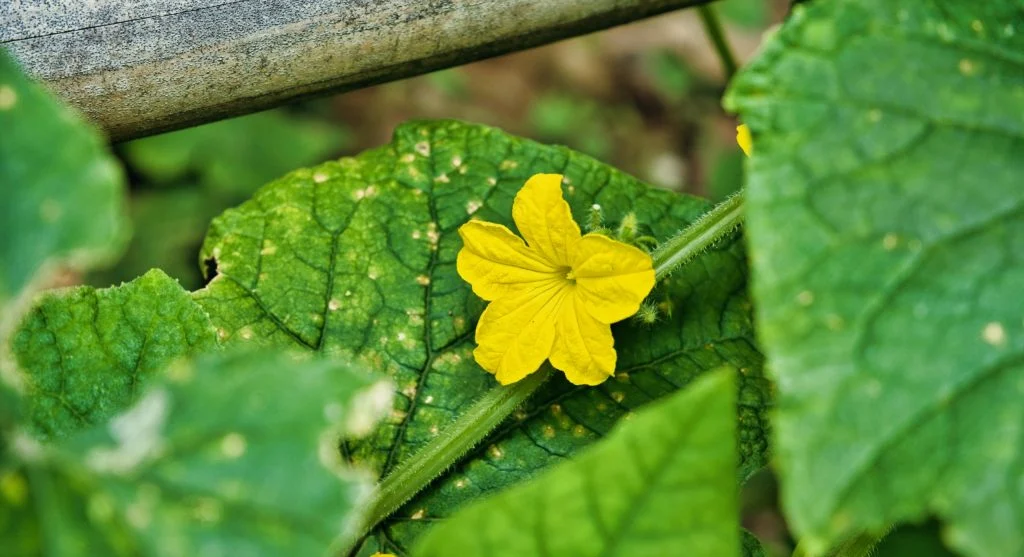
Downy mildew (Pseudoperonospora cubensis) is a serious fungal-like disease that affects cucurbits, including cucumbers. It causes angular yellow patches on the upper surface of the leaves, with the yellow areas often limited by the leaf veins. This is different from nutrient-related yellowing, which is usually more spread out and follows a tip-to-base pattern. Downy mildew creates sharply outlined yellow sections that can look almost like a mosaic.
In humid conditions, the undersides of affected leaf areas may develop a grayish-purple fuzzy growth. Downy mildew can spread quickly and may defoliate an entire plant within two weeks if it is not managed. Copper-based fungicides applied at the first sign of symptoms can help slow the disease, especially when combined with removing and disposing of badly infected leaves. For long-term prevention, planting downy-mildew-resistant varieties is the most effective approach.
Spider Mites
Spider mites cause a different kind of yellowing on cucumber leaves. Instead of large yellow patches, their feeding creates tiny yellow dots across the leaf surface, known as stippling. This pattern looks very different from the broader yellowing caused by nutrient problems or disease.
Fine webbing between leaves and stems confirms that spider mites are present. Treatment starts with strong sprays of water to knock mites off the plant. After that, apply insecticidal soap or neem oil every five to seven days for three consecutive weeks.
Natural Aging of Lower Leaves
Not every yellow leaf on a cucumber plant means something is wrong. As cucumber vines grow and keep producing new foliage at the tips, the oldest leaves near the base naturally turn yellow and die. This normal aging process is called senescence.
If only the lowest one to three leaves are yellowing, and the rest of the plant looks healthy, continues growing, and keeps producing fruit, no treatment is needed. Those older leaves can simply be removed to improve air circulation around the base of the plant.
Temperature Stress
Cucumbers are tropical plants, so they struggle when temperatures move outside their preferred range. Nighttime temperatures below 50°F or daytime temperatures above 95°F for long stretches can both cause stress. Cold stress often leads to yellowing and purpling of the leaves, especially on younger growth. Heat stress usually causes general yellowing, wilting even when moisture is available, and flower drop.
In both cases, the yellowing often improves once temperatures return to the 70°F to 85°F range that cucumbers prefer. Shade cloth can help protect plants during heat waves, while waiting to plant until nighttime temperatures stay reliably above 55°F helps prevent cold-related yellowing.