
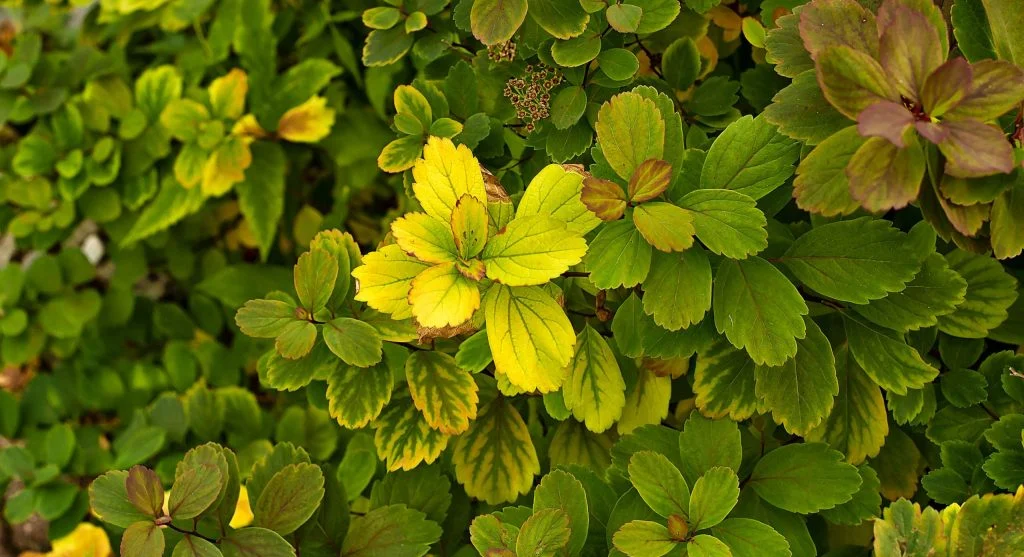
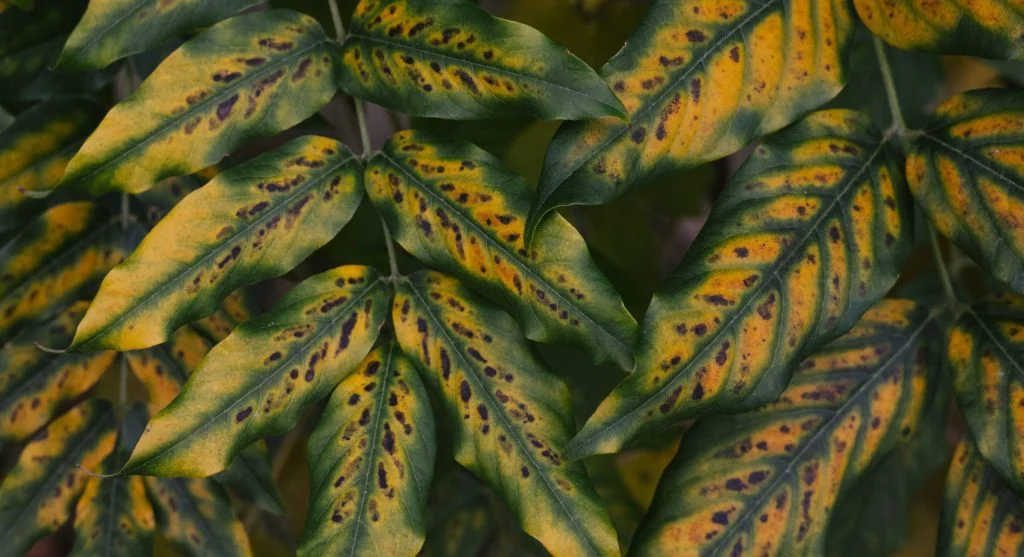
Iron chlorosis is one of the most noticeable and often misunderstood plant health problems found in home gardens and landscapes. It causes leaves to turn yellow while the veins remain dark green, creating a distinctive striped or net-like pattern that is easy to identify once you know what to look for.
The discoloration develops in the tissue between the veins, which may appear pale yellow, light green, or even nearly white, while the veins stay their normal green color. One of the most important clues is where the symptoms appear first: iron chlorosis affects the youngest, newest leaves at the tips of growing stems. This key characteristic helps distinguish it from nitrogen deficiency, which begins on older leaves, and magnesium deficiency, which also causes interveinal chlorosis but appears on mature foliage instead.
Why It Happens: Rarely a Lack of Iron
Although the name suggests otherwise, iron chlorosis is almost never the result of too little iron in the soil. Most garden and landscape soils already contain enough iron for healthy plant growth. The real issue is that when soil pH rises above 7.0, iron becomes chemically bound into forms that plant roots cannot absorb. This is common in soils formed from limestone, areas irrigated with alkaline water, and soils that have received excessive lime applications. Soil scientists refer to this condition as **induced iron deficiency** because the iron is present but unavailable to plants. Simply adding more iron to alkaline soil without correcting the pH is much like filling a locked container with water the resource exists, but the plant has no way to reach it.
Short-Term Fix: Apply Chelated Iron
When immediate improvement is needed, chelated iron fertilizer is the most effective option. In this form, iron is attached to an organic molecule that keeps it available even in alkaline soils, allowing plant roots to absorb it despite unfavorable soil chemistry. Chelated iron can be applied either as a soil drench or a foliar spray, and affected leaves often begin to regain their green color within one to two weeks. However, this treatment only addresses the visible symptoms. Because the soil pH remains unchanged, newly applied iron will eventually become unavailable as well, making repeated applications necessary every few weeks.
Long-Term Fix: Reduce Soil pH
The lasting solution for iron chlorosis in alkaline soils is to lower the soil pH into the 6.0 to 6.5 range, where iron becomes naturally available to plant roots. Elemental sulfur is the amendment most commonly used for this purpose. Soil bacteria gradually convert the sulfur into sulfuric acid, slowly reducing the pH over the course of several months. The amount required depends on the current pH, the desired target pH, and the soil type, with clay soils needing more sulfur than sandy soils to achieve the same change. A soil test provides the information needed to determine the correct application rate.
Adding acidic organic materials such as pine bark, pine needles, or peat moss also helps encourage gradual acidification and supports the effects of sulfur over time. For acid-loving plants like blueberries, azaleas, and rhododendrons growing in alkaline soils, lowering the pH is essential. Without correcting the soil conditions, iron chlorosis will continue to develop no matter how much fertilizer is applied.
Plants Most Susceptible to Iron Chlorosis
Some plant species are especially vulnerable to iron chlorosis caused by high soil pH. Blueberries, azaleas, rhododendrons, gardenias, pin oaks, river birch, and red maples are among the plants most frequently affected. These species evolved in naturally acidic soils and are less capable of absorbing iron under alkaline conditions than plants adapted to limestone-based or prairie soils. Knowing which plants are most susceptible allows gardeners to monitor soil pH regularly and make adjustments before symptoms appear, rather than waiting until visible damage develops.
Key Takeaway
Iron chlorosis, identified by yellow leaf tissue with green veins on the newest growth, is typically caused by high soil pH that prevents plants from accessing the iron already present in the soil—not by a true shortage of iron. Chelated iron offers temporary relief by supplying iron in a form plants can absorb, but repeated applications are required if the soil pH remains high. The long-term solution is to lower soil pH to between 6.0 and 6.5 using elemental sulfur along with acidic organic matter, making existing soil iron available again. Acid-loving plants such as blueberries, azaleas, gardenias, and pin oaks are especially prone to this problem and benefit from regular soil pH monitoring in alkaline regions.