
Dust accumulates on houseplant leaves just as it accumulates on every other surface in a home but while dusty furniture is a cosmetic issue, dusty plant leaves are a functional problem that directly reduces the plant’s health and growth rate. The layer of dust, grime, and mineral deposits that builds up on indoor plant foliage blocks a measurable percentage of the light reaching the leaf surface, reducing photosynthetic efficiency and limiting the energy available for growth. Horticultural researchers have measured photosynthesis reductions of 15 to 30 percent in plants with heavily dust-coated leaves compared to clean-leaved plants of the same species under identical light conditions. In the already light-limited indoor environment, this additional reduction can be the difference between a thriving plant and one that stagnates.
Why Indoor Plants Get Dirtier Than Outdoor Plants
Outdoor plants are cleaned naturally by rainfall a regular wash that removes dust, debris, and many pest organisms from leaf surfaces. Indoor plants never receive this natural cleaning. In addition to household dust, indoor plant leaves accumulate cooking residue (grease particles from kitchen activities), mineral deposits from hard-water misting, and the waxy buildup from commercial leaf-shine products that some plant owners apply for aesthetic purposes. Over months, these layers compound to create a film that is significantly more opaque than outdoor dust alone.
How to Clean Large-Leaved Plants
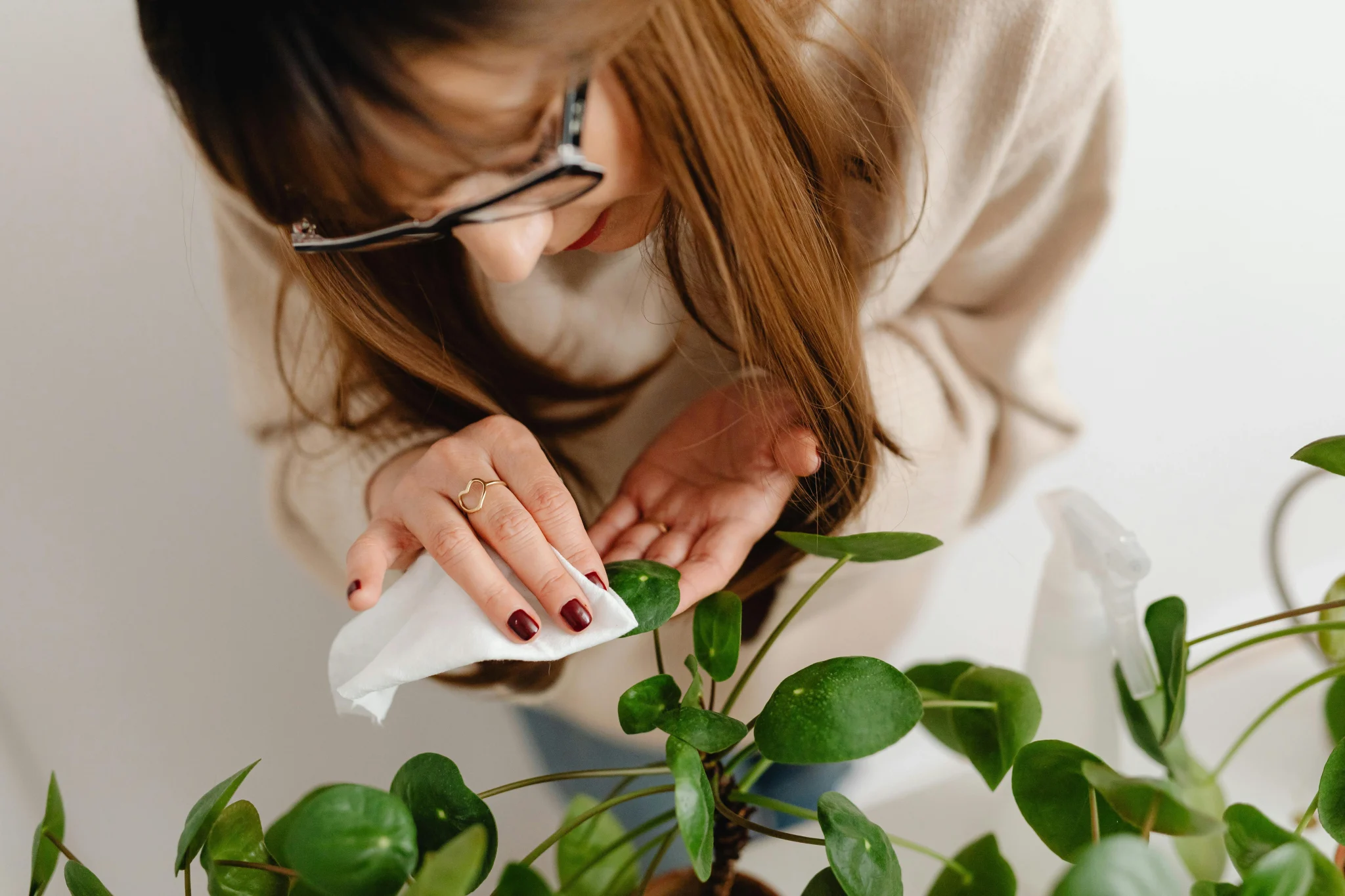
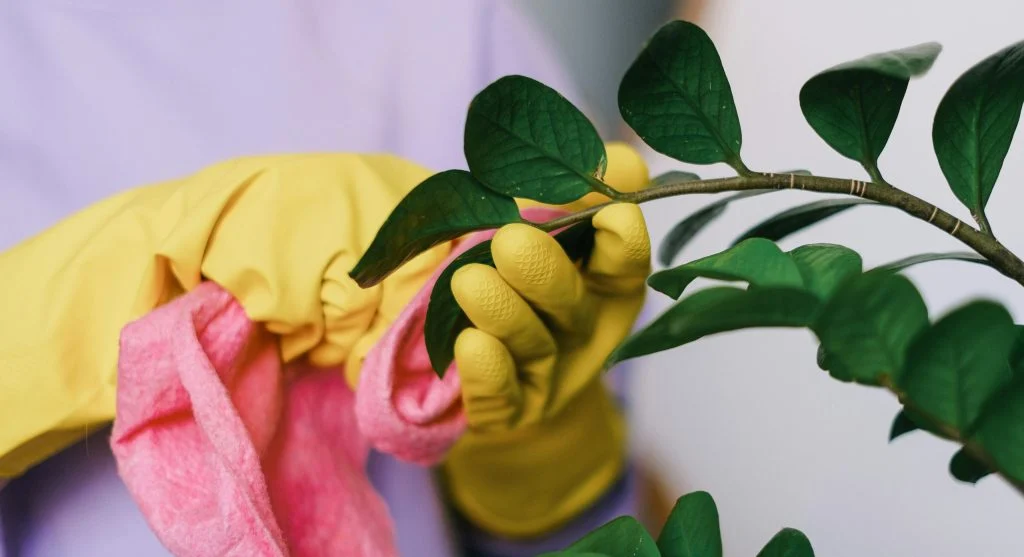
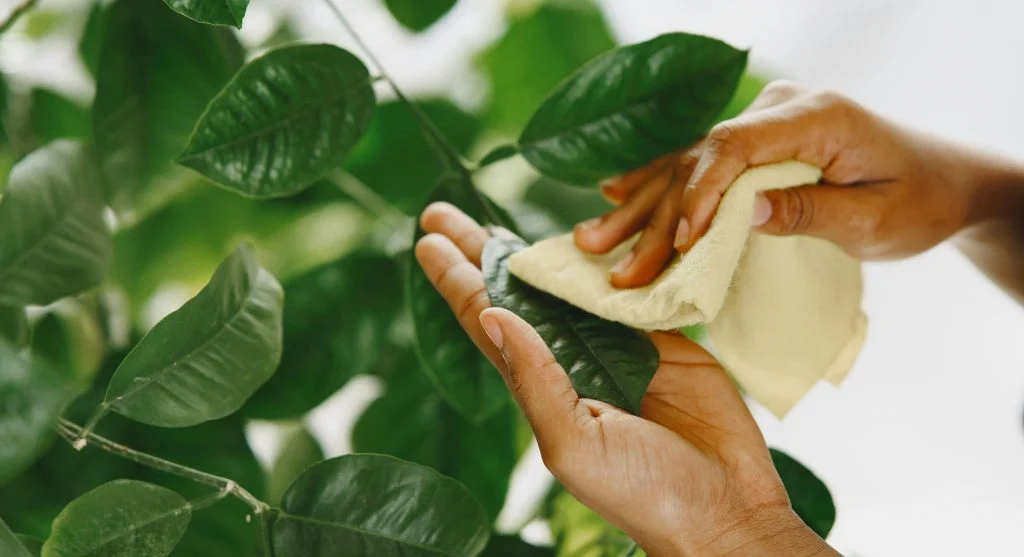
For plants with broad, smooth leaves pothos, rubber plants, monstera, peace lilies, fiddle leaf figs, and philodendrons the most effective cleaning method is wiping each leaf individually with a soft, damp cloth. Support the underside of the leaf with one hand while gently wiping the upper surface with the cloth, then flip and wipe the underside. The underside of the leaf is where stomata (the pores that control gas exchange) are concentrated, so cleaning both surfaces restores full physiological function. Lukewarm water is sufficient for routine cleaning. For leaves with heavier buildup, adding a drop of mild liquid castile soap to the water provides additional cleaning power without damaging the leaf surface.
How to Clean Small-Leaved and Textured Plants
Plants with small, numerous leaves ferns, prayer plants, string-of-pearls, and many succulents are impractical to wipe leaf by leaf. The most efficient method for these plants is a gentle shower: place the plant in a sink or bathtub and run lukewarm water over the entire plant for two to three minutes, allowing the water to rinse dust from all surfaces. The water pressure should be gentle enough to avoid breaking stems or dislodging soil. This shower method also rinses away early-stage pest populations (spider mites, aphids) that may be too small to see individually. Plants with fuzzy or hairy leaves (African violets, some begonias) should not be sprayed or showered because water trapped in the leaf hairs can cause spotting or fungal problems use a soft dry brush (a clean paintbrush or makeup brush works well) to dust these plants instead.
What Not to Use
Commercial leaf-shine products sprays and wipes marketed to give houseplant leaves a glossy appearance coat the leaf surface with oils, waxes, or silicone-based compounds that initially look attractive but clog stomata, attract additional dust, and create an accumulating film that becomes progressively harder to remove. Plant physiologists universally advise against these products. Similarly, mayonnaise, coconut oil, and milk all occasionally recommended as DIY leaf-shine alternatives leave residues that have the same stomata-clogging effect. Clean water (with optional mild soap) is the only cleaning solution that improves leaf function without creating secondary problems.
How Often to Clean
A monthly cleaning schedule is sufficient for most indoor environments. Plants near kitchens, in rooms with forced-air heating (which circulates dust continuously), or near windows that are frequently opened (admitting outdoor particulates) may benefit from cleaning every two to three weeks. The visual test is simple: run a finger across a leaf surface. If a visible dust trail appears on the fingertip, the plant is due for cleaning. Incorporating leaf cleaning into the monthly watering and inspection routine ensures it happens consistently without requiring dedicated time.
Key Takeaway
Dust on houseplant leaves reduces photosynthesis by 15 to 30 percent a significant impact in the already light-limited indoor environment. Large-leaved plants should be wiped with a damp cloth monthly. Small-leaved plants can be rinsed under a gentle shower. Fuzzy-leaved plants should be brushed with a soft dry brush. Commercial leaf-shine products, oils, and DIY alternatives should be avoided because they clog stomata and attract additional dust. Monthly cleaning takes minutes per plant and produces measurable improvement in growth and overall plant health.