
Early blight, caused by the fungus Alternaria solani, is the most common tomato disease found in home gardens across North America. The fungus exists in nearly all garden soils where tomatoes have been grown before, and it tends to return every season once conditions are right. Warm, humid weather, frequent rain, and overhead watering all create the ideal environment for infection. Plant pathologists estimate that early blight can reduce home tomato yields by 20 to 50 percent in affected gardens, making it one of the most serious diseases for non-commercial tomato growers. Catching it early and combining good cultural practices with organic treatment can stop a small infection from turning into the steady defoliation that eventually kills the plant.
Identifying Early Blight Accurately
Early blight almost always begins on the lowest, oldest leaves of the tomato plant. These leaves sit closest to the soil, where fungal spores splash upward during rain or watering. The first signs are small dark brown spots, usually about 1/4 to 1/2 inch wide, with clear concentric rings that create a target-like or bull’s-eye pattern. A yellow halo often forms around each spot.
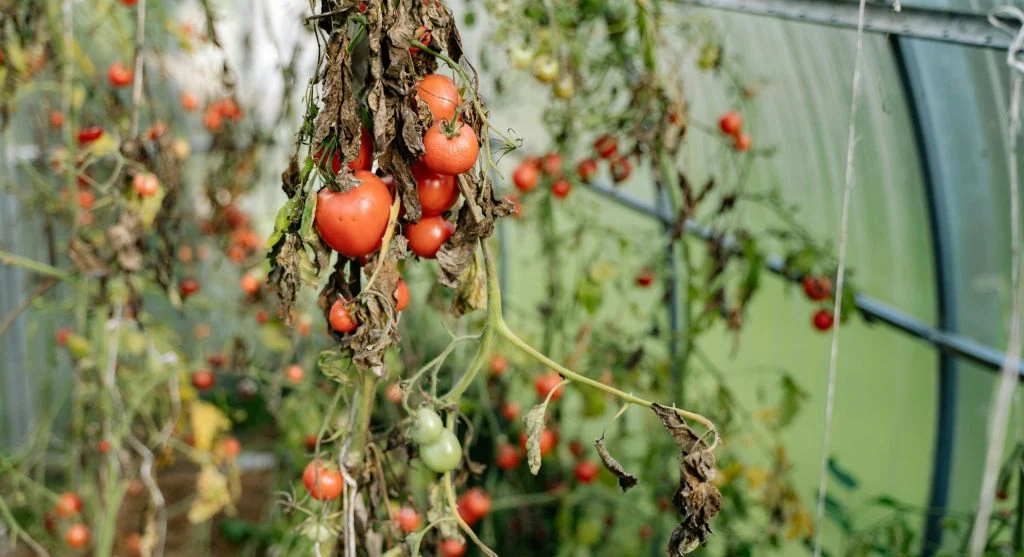
As the disease develops, the spots grow larger and merge together. Eventually, the entire leaf turns yellow, then brown, and falls from the plant. Over several weeks, early blight moves upward, stripping lower branches first before gradually advancing toward the top. The fruit itself is rarely infected directly, but losing the leaf canopy exposes developing tomatoes to sunscald and reduces the plant’s ability to produce the sugars needed for fruit growth and ripening.
Credit: Abdus Samad Mahkri / Pexels
Cultural Prevention: The First Line of Defense
Several cultural practices can greatly reduce the severity of early blight without using any sprays or products. Removing the lowest 12 to 18 inches of foliage from each tomato plant gets rid of the leaves most likely to be infected by soil splash. Covering the soil with three to four inches of straw or shredded leaves helps stop rain from splashing contaminated soil onto the remaining leaves.
Watering at the base of the plant, either with drip irrigation or careful hand watering, keeps foliage dry and prevents the fungus from getting the wet leaf surface it needs to germinate. Giving plants enough space, at least 24 to 36 inches apart, improves air circulation and helps leaves dry faster after rain. Rotating tomatoes to a different bed each year also helps reduce spores in the soil over time. Avoid planting tomatoes, peppers, or potatoes in the same spot two years in a row, since all three are vulnerable to the same pathogen.
Organic Treatment Options
When cultural practices are not enough, copper-based organic fungicides can help suppress early blight if applied preventively or at the very first sign of symptoms. Copper sprays work by killing fungal spores on the leaf surface before they enter the tissue. They do not heal leaves that are already infected, which makes timing especially important.
Spraying should begin as soon as the first spots appear, or preventively in gardens with a history of early blight. Applications should continue every seven to ten days throughout the growing season. Biofungicides containing Bacillus subtilis, sold under several brand names, offer another organic option. They are safe for beneficial insects and can be alternated with copper to help prevent resistance from developing.
What to Do With Severely Infected Plants
Tomato plants that have lost more than 50 percent of their foliage to early blight are unlikely to produce much of a harvest. Removing these badly infected plants from the garden is better than leaving them in place as a source of spores that can spread to nearby healthy plants.
Infected plant material should be bagged and thrown away with municipal waste, not added to compost. The Alternaria fungus can survive in plant debris and may infect next year’s crop if contaminated compost is returned to the garden.