
Understanding the Life Cycle
The adult squash vine borer is a day-flying moth with bright orange and black coloring that mimics a wasp. The moth appears in gardens in late June through July (depending on the region), lays tiny reddish-brown eggs at the base of squash stems, and the hatching larvae bore directly into the vine within hours of emergence. Once inside the stem, the larva is protected from virtually all external treatments — sprays, dusts, and predators cannot reach it. The larva feeds inside the vine for four to six weeks, growing to approximately one inch long, then exits the stem, burrows into the soil, and pupates until the following summer. This protected life cycle inside the vine is what makes vine borers so difficult to control compared to pests that feed on exposed plant surfaces.
Prevention: Row Covers During the Egg-Laying Window
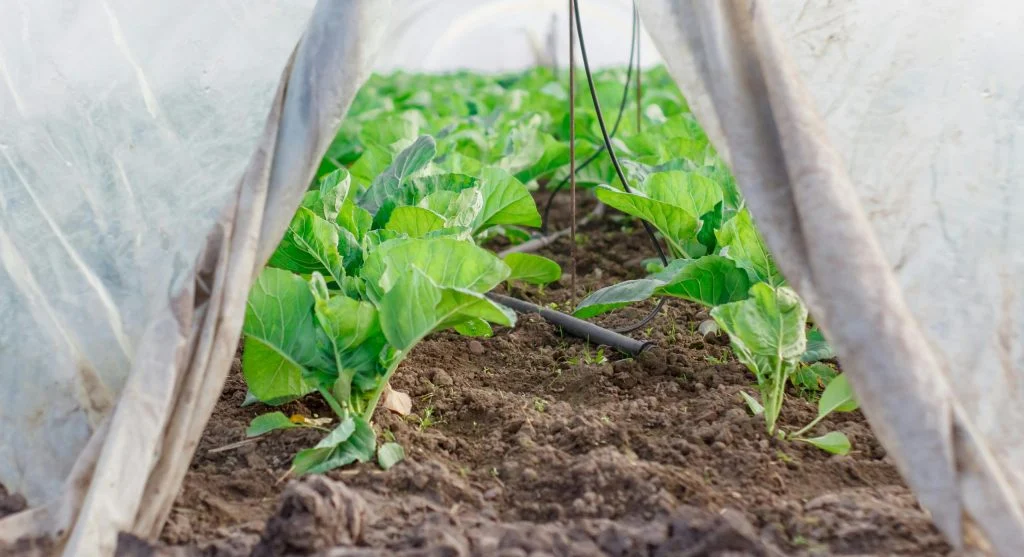
The most effective prevention strategy is physically excluding the adult moth from reaching the vine stems during the egg-laying period. Floating row cover draped over squash plants from the time of transplanting until the first female flowers open (at which point the cover must be removed for pollination) prevents the moth from landing on the stems to deposit eggs. In regions where the vine borer flight period is well-documented (typically late June through mid-July), timing the row cover application to coincide with this window provides effective protection while minimizing the period during which the plants are covered.
Wrapping Stems and Using Bt Injections
Wrapping the lower six to twelve inches of the squash stem with strips of aluminum foil, nylon stocking, or row cover fabric creates a physical barrier that prevents egg-laying on the most vulnerable portion of the vine. This wrapping should be applied at transplanting and maintained throughout the vine borer flight period. For plants already in the ground when the flight period arrives, injecting Bacillus thuringiensis (Bt) into the base of the stem using a syringe provides a biological treatment that kills newly hatched larvae before they can cause significant damage. Weekly Bt injections during the egg-laying period have shown effectiveness in university trials as an alternative to systemic insecticides.
Saving a Plant Already Under Attack
If a squash plant begins to wilt and the gardener finds sawdust-like frass (larval excrement) at the base of the stem — the telltale sign of an active borer — it may still be possible to save the plant. Using a sharp, clean knife, the gardener can carefully slit the stem lengthwise at the point where frass is accumulating, locate the larva inside, remove and destroy it, then bury the slit portion of the stem under moist soil. Squash vines can produce adventitious roots from buried stem sections, potentially bypassing the damaged area and sustaining the plant. Success depends on how much internal damage the larva has already caused before discovery — plants caught early respond better than those where the vine has been tunneled extensively
Key Takeaway
Squash vine borers are the most destructive squash pest in the eastern U.S., killing plants by tunneling inside the vine stem where external treatments cannot reach them. Prevention through row covers during the moth’s egg-laying period (late June through mid-July) is the most effective strategy. Wrapping stem bases with foil or fabric and injecting Bt provide supplementary protection. Plants already under attack may be saved by carefully slitting the stem, removing the larva, and burying the damaged section under moist soil.