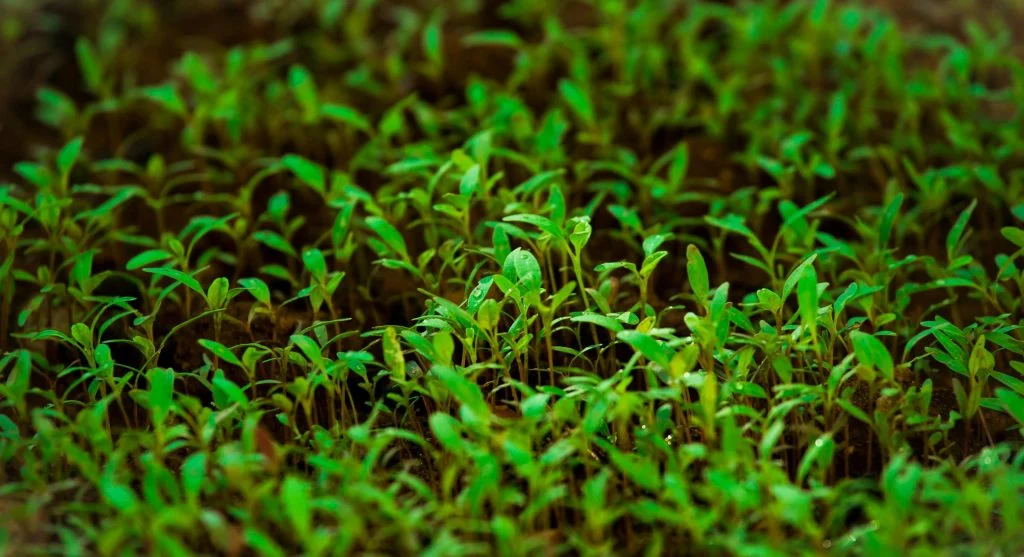

Few things feel more discouraging than watching seedlings germinate successfully, only to collapse and die days or weeks after emerging. Those tiny green sprouts represent the promise of a productive garden, so losing them can feel far more upsetting than their size suggests. Plant pathologists and seed-starting specialists have identified seven common causes of post-germination seedling death, and nearly all of them can be prevented once gardeners understand the specific conditions that make young plants so vulnerable.
1. Damping Off Disease
Damping off, caused by several soil-borne fungi including Pythium, Rhizoctonia, and Fusarium, is the most common killer of newly sprouted seedlings. Affected seedlings may look healthy one day and collapse at the soil line the next. The stem near the base often appears pinched, water-soaked, or thread-thin. These fungal organisms attack the soft, undeveloped stem tissue at and just below the soil surface, girdling the seedling before it has enough structural strength to resist.
Prevention depends on using sterile seed-starting mix instead of garden soil, providing good air circulation with a small fan on low speed near the seed trays, avoiding overwatering, and watering from below rather than above so the soil surface and stem bases stay drier.
2. Overwatering
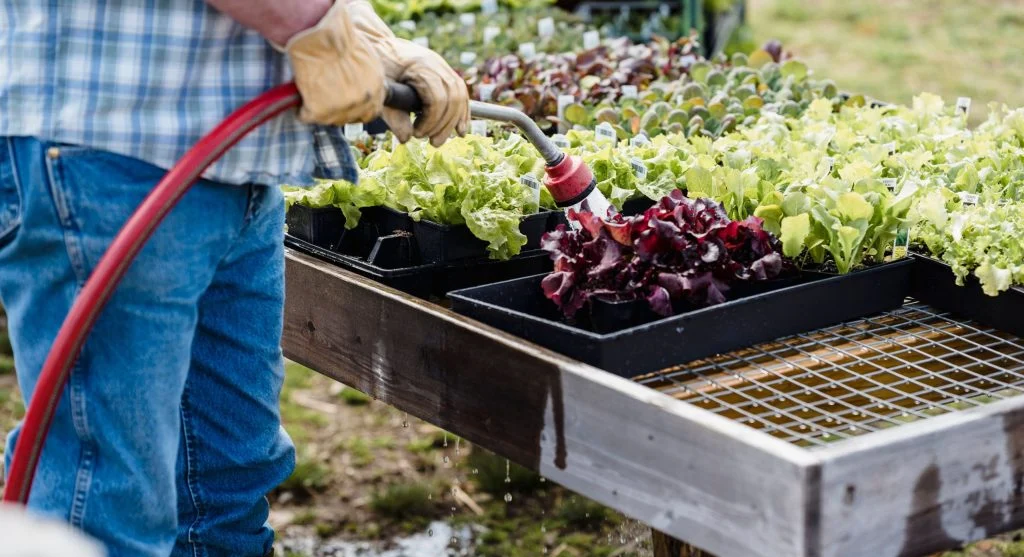
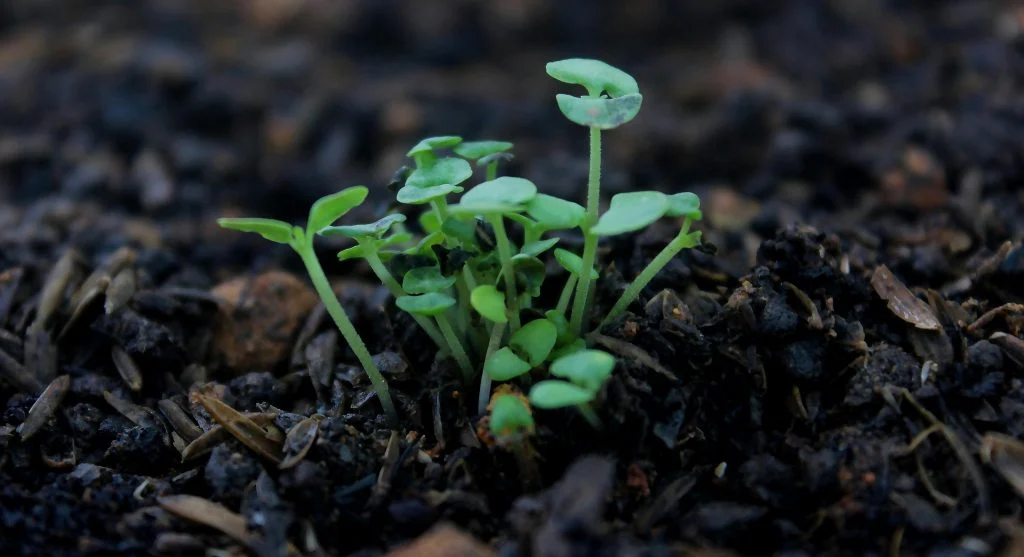
Seedlings need steady moisture, but they are highly sensitive to waterlogged conditions. Constantly saturated growing medium deprives roots of oxygen, encourages fungal growth, and can kill seedlings within 48 to 72 hours. The growing medium should feel like a wrung-out sponge: damp throughout, but never dripping.
Bottom watering, which means setting seed trays in a shallow tray of water for 10 to 15 minutes and then removing them, gives seedlings thorough hydration without saturating the surface layer.
3. Insufficient Light
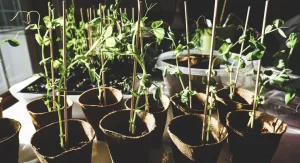
Seedlings that do not receive enough light grow tall, thin, and pale, a condition known as legginess. These stretched seedlings have weak stems that cannot support themselves and are much more vulnerable to disease than compact, sturdy seedlings. Most vegetable seedlings need 14 to 16 hours of bright light each day.
A south-facing window rarely provides enough intensity or duration, especially during the late-winter months when most seeds are started. An LED grow light placed two to four inches above the seedling canopy and run on a timer for 14 to 16 hours daily can produce much sturdier seedlings at minimal cost.
4. Too Much Heat After Germination
Heat mats and warm conditions between 75°F and 85°F are helpful for germination, but the heat should be reduced once seedlings emerge. Continued high temperatures encourage leggy, weak growth and increase the seedling’s water demand beyond what its undeveloped root system can supply.
After emergence, most vegetable seedlings grow best at 60°F to 70°F during the day and 55°F to 60°F at night. These cooler conditions help produce compact, stocky plants with stronger stems.
5. Forgetting to Thin
Seedlings sown too thickly compete heavily for light, water, and root space. This overcrowding produces weak, spindly plants that shade each other and create the humid, stagnant conditions that damping off fungi can exploit.
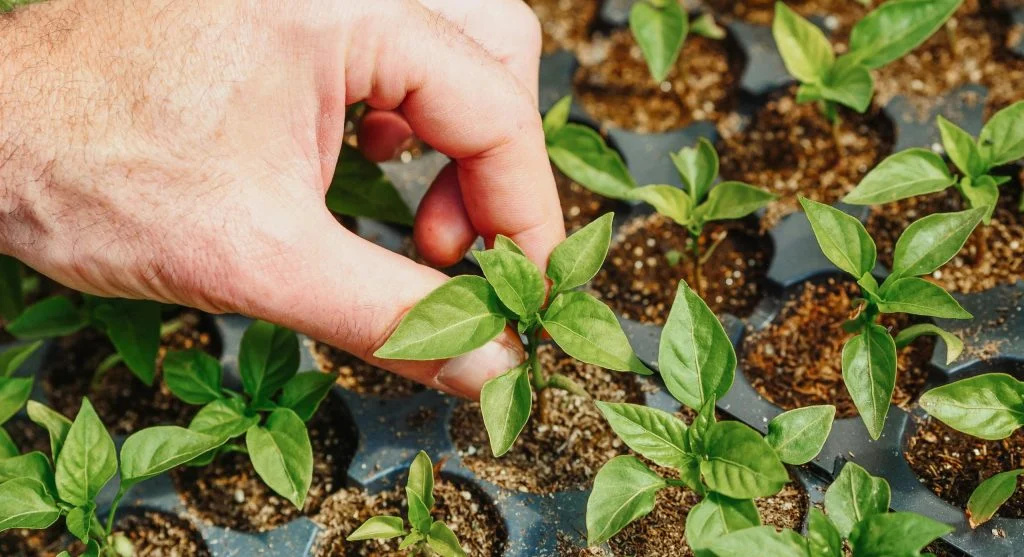
Thinning to one seedling per cell, or spacing seedlings two inches apart in open trays, as soon as the first true leaves appear gives each remaining plant the resources it needs to develop properly.
6. Transplant Shock From Moving Outdoors Too Early
Seedlings moved directly from a protected indoor environment into outdoor conditions without a hardening off period can suffer severe shock. Sunburn, windburn, temperature stress, and dehydration can kill them within days.
The hardening off process, which gradually increases outdoor exposure over 7 to 14 days, is essential for preparing indoor-started seedlings for the transition to the garden, as discussed in detail in an earlier article in this series.
7. Fertilizing Too Soon or Too Strong
Seedlings do not need fertilizer until they develop their first set of true leaves, which are the second pair of leaves that appear and look different from the initial seed leaves. Before that stage, the seedling is sustained entirely by the energy stored in the seed.
Applying fertilizer before true leaves appear, or using full-strength fertilizer on young seedlings, can cause salt burn on tender roots. This damage may show up as browning leaf edges, wilting, and sudden death. When fertilization begins, it should be applied at one-quarter to one-half the recommended strength, then increased gradually as the seedlings mature.