

Whiteflies are tiny insects that feed on plant sap and typically gather on the undersides of leaves. When an infested plant is disturbed, they rise into the air in a noticeable cloud of white insects before quickly settling back down. Although they are called whiteflies, they are not true flies. They are more closely related to aphids and scale insects, sharing the same feeding behavior of piercing leaf tissue and extracting sap from plants.
Large whitefly populations can seriously weaken plants, leading to yellowing leaves, reduced vigor, and premature leaf drop. They also produce large amounts of honeydew, a sticky, sugary substance that coats foliage and encourages the development of sooty mold. Whiteflies are especially troublesome on tomatoes, peppers, eggplants, cucumbers, and squash, as well as many ornamental plants such as hibiscus, lantana, and poinsettias.
Identification and Life Cycle
Adult whiteflies are very small, measuring about 1/16 inch long. They have white, powdery wings that give them a moth-like appearance and are typically held flat over the body when at rest.
One of the easiest ways to identify whiteflies is by gently shaking an affected plant. If whiteflies are present, the adults will fly up in a small cloud before returning to the plant within a few seconds.
The immature stages are found on the undersides of leaves. Their appearance changes as they develop:
* Eggs are tiny, pale, and oval-shaped.
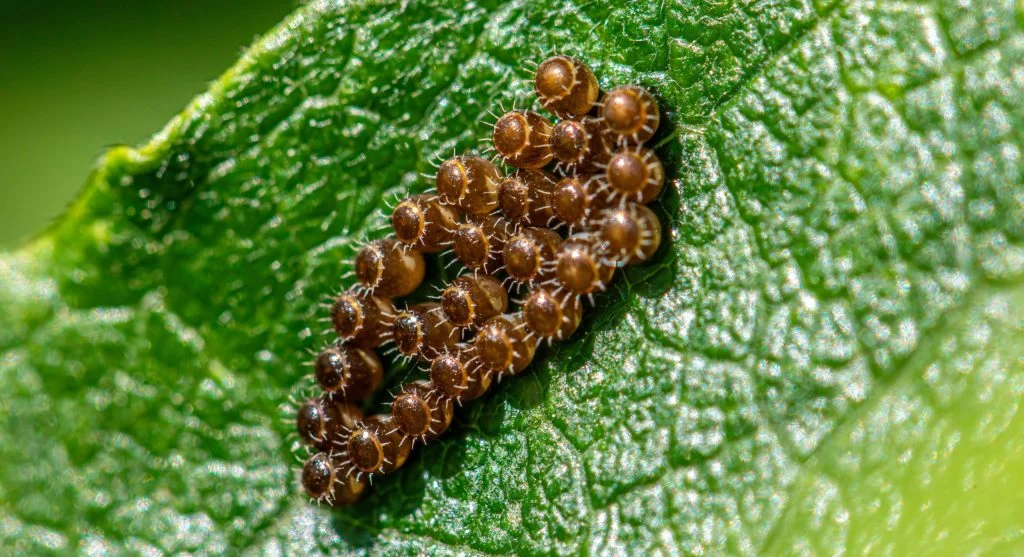
* Nymphs are flat, translucent, and largely immobile, resembling tiny scale insects.
* Pupae are slightly raised and develop visible red eyes shortly before adults emerge.
Under warm conditions, whiteflies complete their life cycle from egg to adult in approximately 25 to 30 days. Female whiteflies can lay between 200 and 400 eggs during their lifespan, allowing populations to increase rapidly if infestations are not detected and managed early.
Organic Control Methods
Yellow sticky traps are a useful tool for both monitoring and reducing adult whitefly populations. When placed near affected plants, these traps capture flying adults and provide a general indication of infestation levels. An increasing number of trapped whiteflies often signals that the population is growing.
Insecticidal soap is one of the most effective organic treatments. When sprayed directly onto whiteflies, it kills by disrupting the cell membranes of these soft-bodied insects. Because the majority of whiteflies live on the undersides of leaves, thorough coverage is essential. The spray must come into direct contact with the insects to be effective.
Neem oil is another valuable option. It provides contact control while also creating a residual anti-feeding effect that interferes with whitefly development and reduces nymph survival.
Both insecticidal soap and neem oil require repeated applications every five to seven days for a minimum of three consecutive treatments. This schedule is necessary because whitefly eggs are resistant to both products, and new adults continue emerging from existing egg populations.
Prevention Strategies
Reflective mulch, such as aluminum foil strips or silver-colored plastic mulch, can significantly reduce whitefly activity around susceptible crops. Research conducted by universities has shown that reflective surfaces can reduce adult whitefly landings by as much as 70 percent by disorienting the insects and making it more difficult for them to locate host plants.
Carefully inspecting new plants before bringing them into a garden or greenhouse is another important preventive measure. Infested transplants are one of the most common ways whiteflies are introduced into previously unaffected areas.
Encouraging beneficial insects provides effective long-term biological control. Natural enemies of whiteflies include:
* Parasitic wasps (*Encarsia formosa*)
* Ladybug larvae
* Lacewing larvae
These beneficial species help keep whitefly populations in check and reduce the need for repeated pesticide applications. Avoiding broad-spectrum insecticides is important because these products often kill beneficial insects along with the pests.
Key Takeaway
Whiteflies are most easily recognized by the cloud of tiny white insects that rises when an infested plant is disturbed. They feed and reproduce primarily on the undersides of leaves, weakening plants and producing honeydew that can lead to sooty mold growth.
Successful organic control depends on thorough applications of insecticidal soap or neem oil to the undersides of leaves every five to seven days for at least three treatment cycles. Yellow sticky traps help capture adults and track population changes, while reflective mulch can reduce adult landings by up to 70 percent. Long-term management is most effective when gardeners inspect new plants carefully and protect beneficial predators that naturally suppress whitefly populations.