
Collecting seeds from garden flowers is one of the most satisfying end-of-season tasks a gardener can do. It extends the life of the garden beyond the final frost, costs nothing, and creates a personal seed collection that can improve over time through natural selection with each season of growing and saving. Many popular annual and perennial flowers produce plenty of easy-to-collect seeds that germinate reliably the following spring. The process requires no special equipment, no botanical expertise, and only a short walk through the garden with a paper bag and a pair of scissors.
When to Collect: The Seed Must Be Fully Mature
The most common mistake in flower seed collection is harvesting too early, before the seeds have fully matured on the plant. Immature seeds may look plump and healthy, but they often lack the fully developed embryo and stored energy reserves needed for strong germination. The visual cue for maturity varies by species, but the general pattern is usually the same: the flower fades, the seed head or pod develops and swells, and then the structure turns brown, dry, and papery.
For most flowers, seeds are ready to collect when the seed head is completely dry and brown, the stem supporting it has dried as well, and the seeds inside are hard, dark, and separate easily when shaken or rubbed from the seed head.
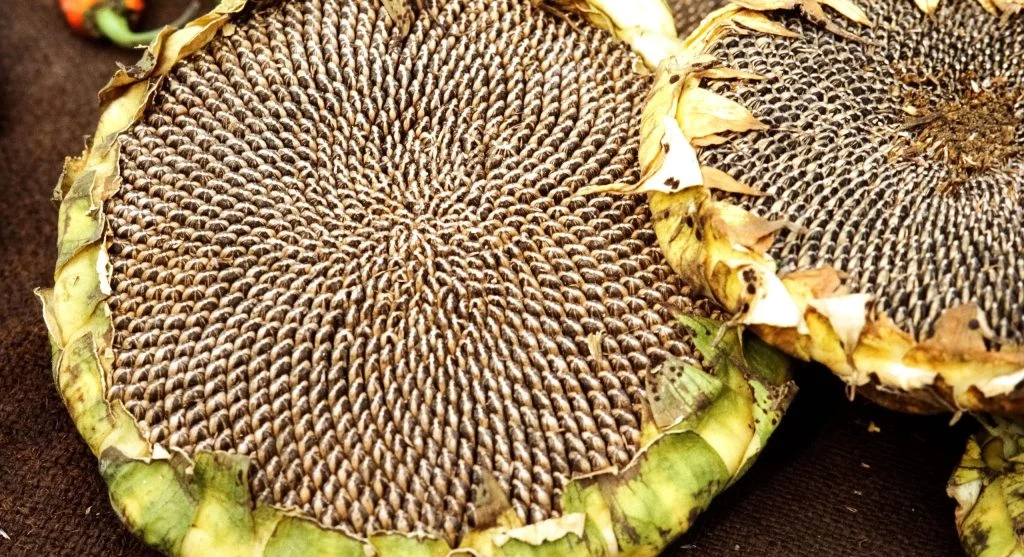
Marigold seeds are mature when the dried flower head crumbles easily and reveals dark, narrow seeds inside. Zinnia seeds are found in the dried, cone-shaped center of the spent flower, with each petal base holding one seed. Sunflower seeds are ready when the back of the flower head turns brown and the seeds feel firm and full. Cosmos seeds are long, thin, and dark, attached at the center of the dried flower head. Morning glory seeds form inside round pods that split open when dry, releasing hard, dark seeds.
Processing and Drying
Collected seed heads should be placed in paper bags or spread on newspaper and allowed to dry further in a warm, well-ventilated area for one to two weeks. Plastic bags should be avoided because they trap moisture and can encourage mold.
Once the seed heads are fully dry, the seeds can be separated from the chaff by gently rubbing, shaking, or crumbling the dried structures over a plate or bowl. A light breeze or gentle blowing can remove lightweight chaff while the heavier viable seeds remain behind. Perfect separation is not necessary. A small amount of leftover plant material stored with the seeds will not affect germination.
Storage for Maximum Viability
Clean, dry seeds should be stored in labeled paper envelopes or small glass jars with tight-fitting lids. Each container should include the flower species, variety name if known, color, and collection date. Adding a small silica gel desiccant packet to each storage container helps absorb any remaining moisture that could reduce viability over time.
Seeds stored in a cool, dark, dry place maintain the best germination potential. A refrigerator is ideal, especially at 35 to 50°F. Under proper storage conditions, many flower seeds remain viable for two to five years, depending on the species. Most annual flower seeds, including zinnias, marigolds, cosmos, sunflowers, and nasturtiums, usually stay viable for three to five years when stored correctly.
Key Takeaway
Flower seed collection is straightforward: wait until the seed heads are fully dry and brown on the plant, gather them into paper bags, let them dry indoors for another 1–2 weeks, separate the seeds from the chaff, and store them in labeled envelopes with desiccant in a cool, dark place. Marigolds, zinnias, sunflowers, cosmos, nasturtiums, and morning glories are among the easiest flowers for seed saving. When stored properly, flower seeds can remain viable for 3–5 years, creating a free, self-renewing supply that becomes better adapted to local conditions with each generation.