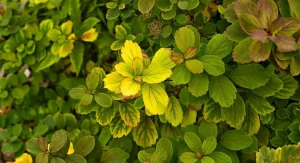

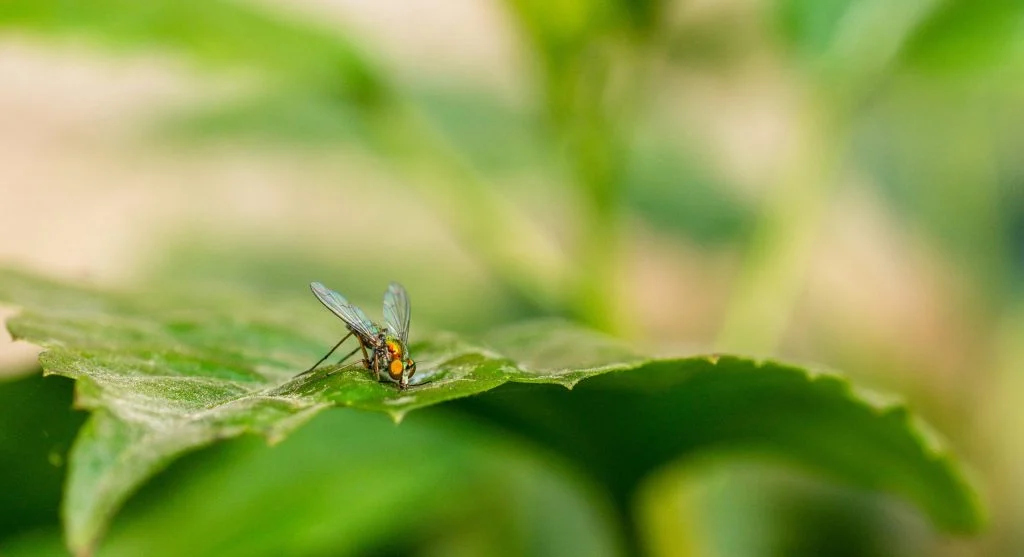
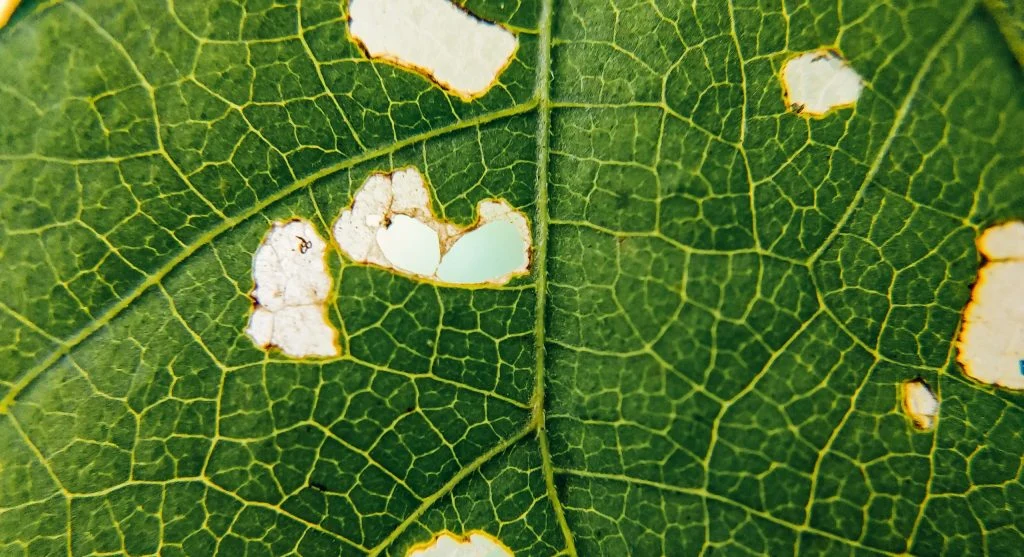
The winding trails and blotchy marks that show up on the leaves of spinach, chard, beets, tomatoes, and many ornamental plants are caused by leaf miner larvae. These tiny fly or moth larvae live and feed between the upper and lower surfaces of the leaf, creating tunnels as they move through the soft inner tissue.
Leaf miners are especially frustrating because they do not feed on the outside of the leaf like many common garden pests. Since the larvae stay protected inside the leaf tissue throughout their larval stage, most contact sprays cannot reach them. Understanding the leaf miner life cycle helps reveal the brief windows when organic control methods can actually work.
The Life Cycle: Where Control Opportunities Exist
Adult leaf miners are small, hard-to-notice flies in the case of the most common vegetable leaf miners. They lay tiny white eggs on the undersides of host plant leaves. These eggs usually hatch within three to five days. Once the larvae emerge, they immediately bore into the leaf tissue and begin feeding.
The larvae continue feeding for two to three weeks, leaving behind the visible tunnels or blotchy patches as they consume the soft tissue between the leaf surfaces. When they are fully grown, they either drop to the soil to pupate or pupate inside the leaf itself. Adult flies emerge from the pupae in one to three weeks, and the cycle begins again. In warm climates, several generations can occur in a single growing season.
The two stages where leaf miners are most vulnerable are the egg stage, when the eggs are still on the leaf surface, and the adult fly stage, before eggs are laid. Once the larva enters the leaf, it is essentially protected from external treatments.
Row Covers: The Most Effective Organic Prevention
Floating row cover is one of the most dependable ways to prevent leaf miner damage, especially on susceptible crops like spinach, chard, and beets. When placed over plants before adult flies become active in spring, the lightweight fabric creates a physical barrier that keeps the flies from landing on leaves and laying eggs.
The fabric still allows light, air, and water to reach the plants, so crops can continue growing normally underneath it. Since spinach, chard, and beets do not need insect pollination, the row cover can stay in place for the entire growing season without causing problems. When the edges are properly anchored, this single method can prevent nearly all leaf miner damage.
Crushing Eggs and Larvae by Hand
Gardeners who do not want to use row covers can still manage leaf miners by checking plants regularly. Inspect the undersides of leaves for tiny white eggs, especially on young, tender leaves, which adult flies prefer for egg-laying. These eggs can be rubbed off or crushed with a finger before they hatch.
Once tunnels appear, the larva inside can often be killed by gently squeezing the tunnel between your thumb and forefinger. This pressure crushes the larva without causing much harm to the surrounding leaf tissue. Removing and disposing of heavily mined leaves also helps reduce the number of larvae that survive long enough to pupate and become the next generation of adults.
Why Sprays Are Largely Ineffective
Most contact insecticides, including organic options such as neem oil and insecticidal soap, do not work well against leaf miners. The reason is simple: the larva is hidden inside the leaf, where the spray cannot reach it. Spraying the leaf surface may kill adult flies if the spray touches them directly, and it may affect eggs on the surface, but it will not reach larvae already feeding inside the leaf.
Systemic insecticides can move into plant tissue and reach the larvae, but these products are generally not compatible with organic gardening and are not approved for food crops in many areas. For home gardeners, the most practical and effective organic approach is a combination of row covers, regular egg-crushing, and removing heavily mined leaves.