
Garlic is one of the most space-efficient, low-maintenance, and rewarding crops a home gardener can grow. One clove planted in fall turns into a full-sized bulb the following summer, multiplying six to twelve times depending on the variety. A 4-by-8-foot raised bed planted with garlic can produce 60 to 100 bulbs, which is enough to supply most households for a year. That return comes from only a small investment in seed garlic and about four total hours of work spread over eight months.
Even with that impressive payoff, garlic is still missing from many home gardens. Some gardeners simply do not realize it should be planted in fall rather than spring. Others feel discouraged by the long eight- to nine-month growing season, especially when compared with faster summer vegetables.
Hardneck vs. Softneck: Choosing the Right Type
Garlic is generally divided into two main types, and each one differs in flavor, storage life, climate preference, and growth habit. Hardneck varieties, including Rocambole, Porcelain, and Purple Stripe, produce a stiff central stalk that forms a curling flower scape in spring. Hardneck garlic usually has a more complex, stronger flavor than softneck garlic. It also produces fewer cloves per bulb, but those cloves are larger. This type is especially well suited to cold winter climates in zones 3 through 6. The trade-off is storage life, since hardneck garlic typically keeps for only four to six months after harvest.
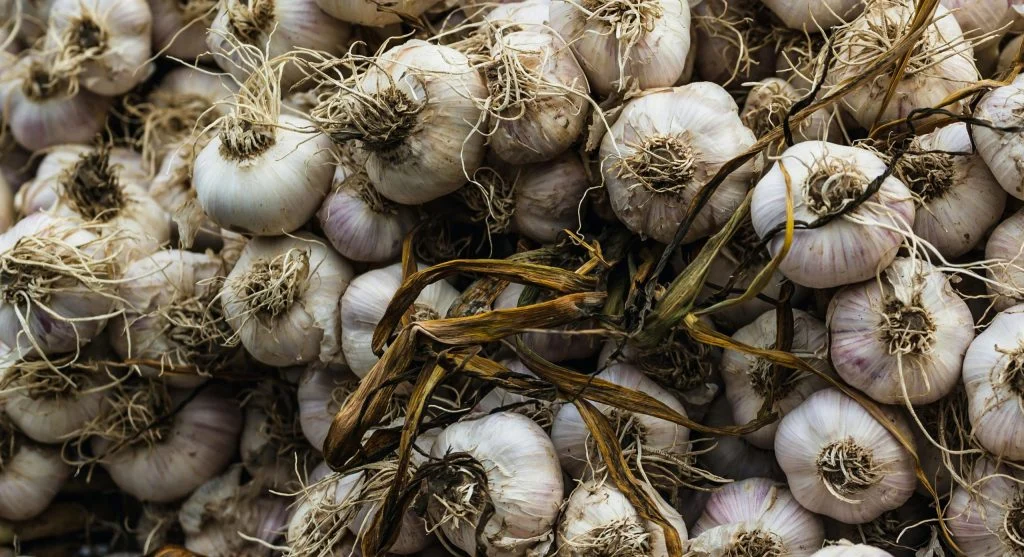
Softneck varieties, such as Artichoke and Silverskin, do not produce a scape. Their flexible stems can be braided for decorative storage, and the bulbs usually contain more cloves, though the cloves are smaller. Softneck garlic stores much longer, often eight to twelve months, which is why it is the type most commonly found in grocery stores. It performs best in mild winter climates, especially zones 6 through 9. Gardeners in zones 5 and 6 can usually grow either type successfully.
Planting: Timing and Technique
Garlic is planted in fall, about four to six weeks before the ground freezes. For most of the northern United States, that means October. In zones 7 through 9, planting usually takes place in November. This timing gives the cloves enough time to form roots through fall and early winter, without pushing too much green growth before dormancy.
To plant garlic, separate the individual cloves from the bulb while keeping the papery skin on each clove intact. Plant each clove pointed end up, two inches deep, and space cloves six inches apart. After planting, cover the bed with four to six inches of mulch, such as straw or shredded leaves. Mulch helps protect the soil from freeze-thaw cycles, suppresses winter and early-spring weeds, and holds moisture as the garlic begins growing again in spring.
Seed garlic should come from a reputable seed garlic supplier. Grocery store garlic is often treated with sprout inhibitor and may carry diseases that are not present in certified seed stock.
Spring and Summer Care
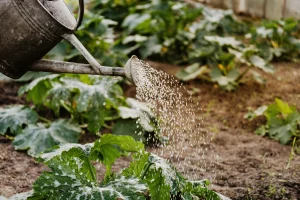
Garlic pushes up through the mulch in early spring and grows steadily through April, May, and June. During this period, the main needs are steady moisture and light feeding. Garlic should receive about one inch of water per week, then no water during the final two weeks before harvest to help the bulbs cure properly. One to two applications of balanced organic fertilizer in March and April support the fastest stage of active growth.
Hardneck garlic produces curling flower scapes in late May or June. These should be snapped off once they have formed one to two loops. Removing the scapes redirects the plant’s energy away from flower production and toward larger bulbs. The scapes are also a useful kitchen bonus. Their mild garlic flavor works well in stir-fries, pesto, and grilled dishes.
Harvesting and Curing for Maximum Storage
Garlic is ready to harvest when the lower third to half of the leaves have turned brown while the upper leaves are still green. This usually happens from late June through mid-July, depending on the variety and climate. Harvesting too early results in small, poorly developed bulbs. Waiting too long can cause the bulb wrappers to break down in the soil, which reduces storage life.
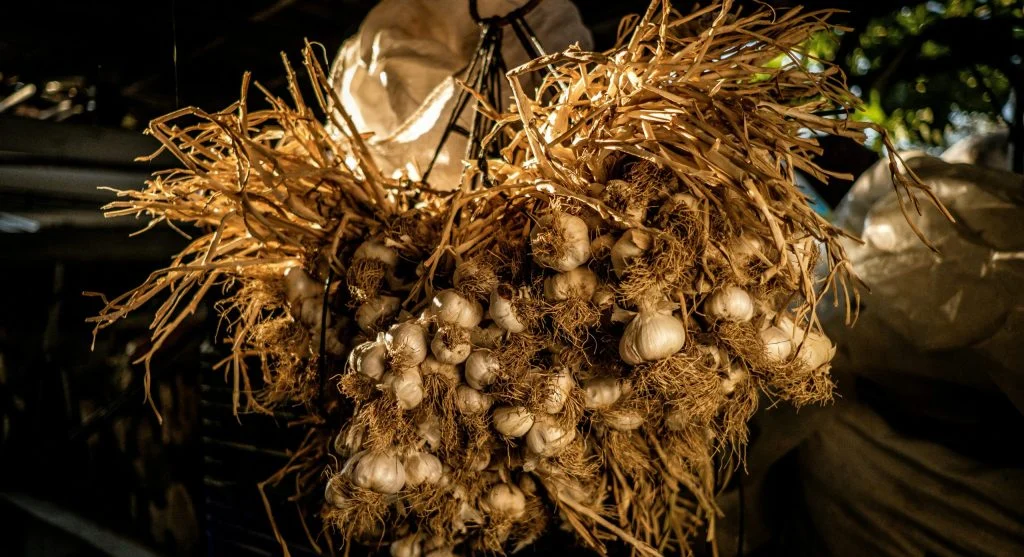
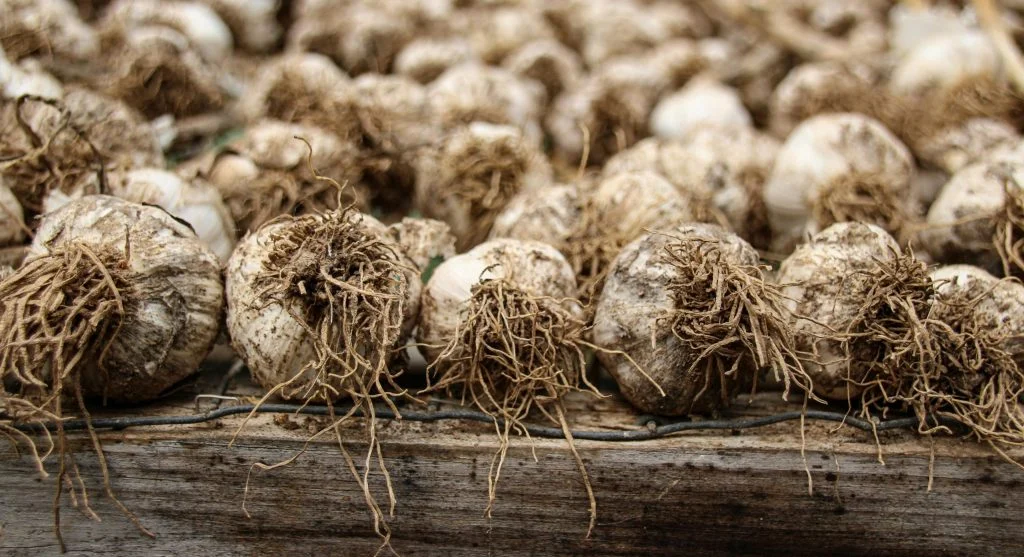
Bulbs should be lifted carefully with a garden fork rather than pulled by the stem, since pulling can separate the stem from the bulb. After harvest, lay the bulbs in a single layer in a warm, dry, well-ventilated place out of direct sun for two to four weeks. This curing period toughens the outer wrappers, dries the stems, and prepares the bulbs for long-term storage.
Once the garlic has cured, trim the roots and cut the stems to about one inch above the bulb. For softneck varieties, the stems can also be left long for braiding. Store the finished bulbs in a cool, dry, dark place with good air circulation, ideally between 55°F and 65°F.