
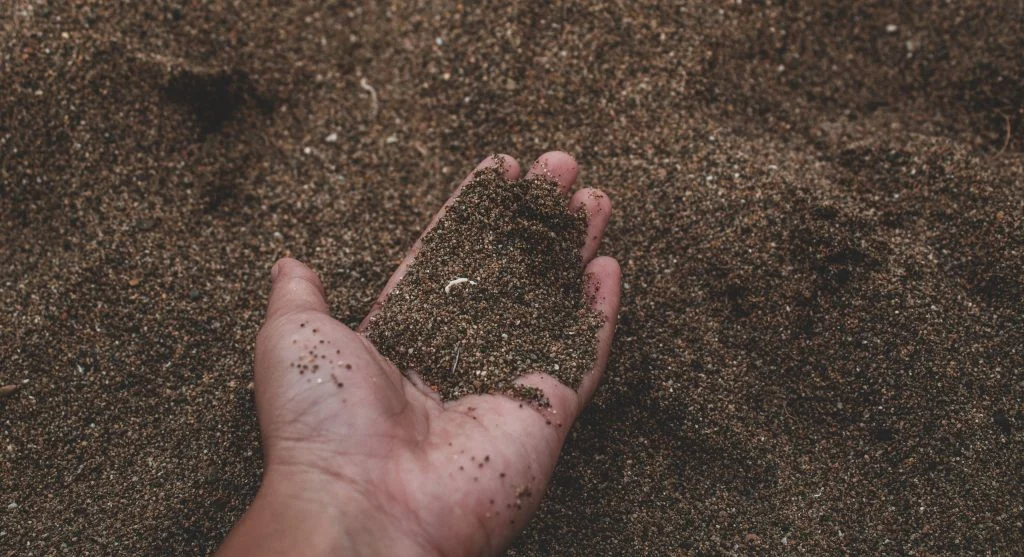
Sandy soil creates the opposite challenge of clay soil. While clay holds too much water and too many nutrients, sand does not hold enough of either. When water is poured onto sandy soil, it drains through in just a few minutes, carrying dissolved nutrients with it before plant roots have time to absorb them.
Gardeners with sandy soil often have to water more often, fertilize more frequently, and still may end up with plants that are less vigorous than those grown in loam or clay-based soils. Soil scientists often describe this as the “leaky bucket” problem. Sandy soil has excellent drainage and aeration, which plant roots appreciate, but it has very little ability to hold the water and nutrients plants need between watering and feeding.
As with improving clay soil, the solution centers on organic matter but the way it works is different. In clay, organic matter improves structure by helping form aggregates that open up pore spaces. In sandy soil, organic matter works by filling the gaps between sand particles with sponge-like material that can absorb and hold water and nutrients.
Why Organic Matter Is the Only Lasting Solution
Adding clay to sandy soil may seem like the obvious fix. Clay holds water and sand does not, so mixing the two sounds like it should create a more balanced soil. In theory, it can work. In practice, it takes a huge amount of clay about 20 to 30 percent of the total soil volume to make a meaningful difference. The result can also be hard to work and more likely to compact when wet.
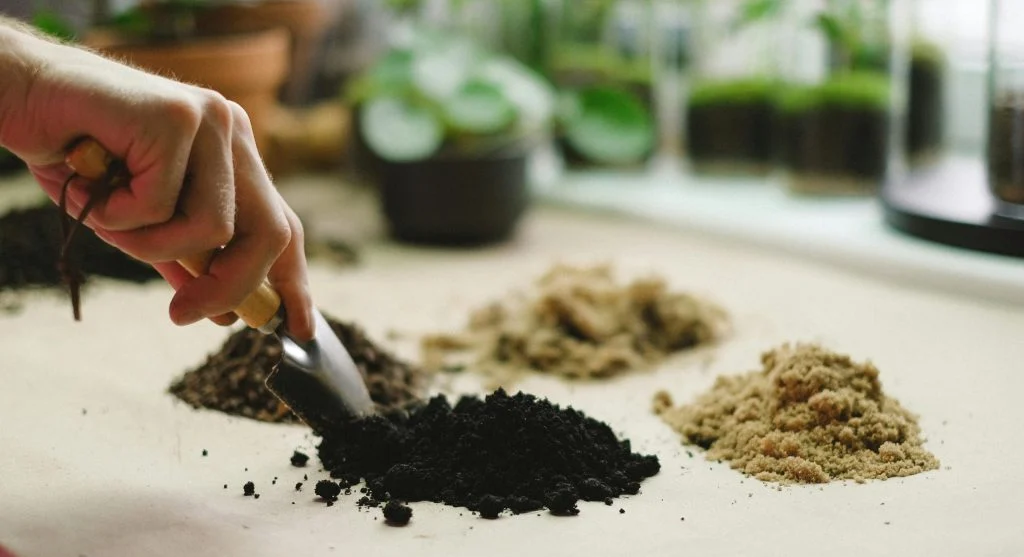
Organic matter, such as compost, aged manure, leaf mold, and peat moss, gives sandy soil the water-holding and nutrient-holding ability it lacks without creating the compaction and workability problems that can come from adding clay. Organic matter can hold up to 20 times its weight in water, and its cation exchange capacity the ability to hold positively charged nutrient ions like potassium, calcium, and magnesium is much higher than that of sand particles.
The Amendment Strategy for Sandy Soil
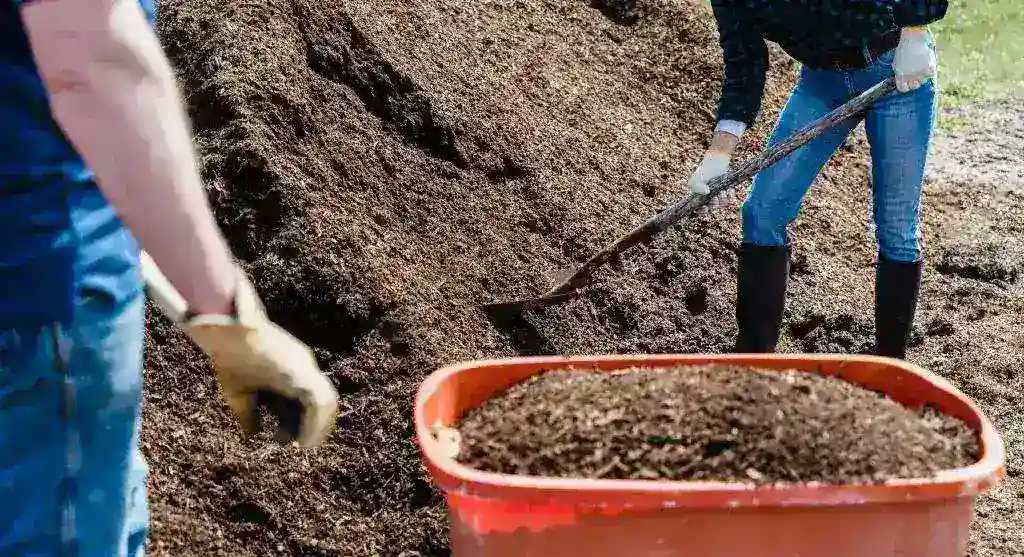
Sandy soil needs heavier and more frequent additions of organic matter than clay or loam. This is because organic matter breaks down faster in sandy soil, where better aeration speeds up microbial activity. It also leaches more easily because water moves through sand quickly, carrying dissolved organic compounds along with it.
The first amendment should be generous: four to six inches of finished compost worked into the top 10 to 12 inches of soil. After that, annual applications of two to three inches of compost each spring help maintain and continue building organic matter levels. Adding shredded leaves or other organic materials in the fall gives the soil even more support.
Unlike clay soil, where improvement can often be seen within one season, sandy soil improves more gradually. Gardeners may notice a difference after the first season, but lasting transformation usually takes three to five years of consistent organic matter additions.
Mulching: Essential for Moisture Conservation
Mulch is especially important in sandy soil because rapid drainage means surface evaporation makes up a larger share of total water loss. A four-inch layer of organic mulch, such as straw, shredded leaves, or wood chips, spread over sandy beds can reduce evaporation by 25 to 50 percent. It also helps moderate soil temperature and adds organic matter to the soil surface as it breaks down.
Keeping a thick layer of mulch in place year-round not only during the growing season provides a steady supply of organic matter. This continuous input helps speed up the soil-building process over time.
Watering and Feeding Adjustments for Sandy Soil
Until organic matter levels have built up enough, which usually takes three to five years of regular amendment, gardeners working with sandy soil need to adjust how they water and feed their plants. Watering should be more frequent but shorter in duration than it would be in heavier soils.
Applying half an inch of water twice per week, instead of one inch once per week, keeps the root zone more consistently moist. It also reduces the rapid drainage loss that often happens after one heavy watering.
Fertilizer should be handled the same way: smaller amounts applied more often. Splitting a monthly fertilizer application into two bi-weekly applications helps reduce the amount of nutrients that leach below the root zone between feedings.
Slow-release organic fertilizers, such as compost-based blends, bone meal, and greensand, are especially useful in sandy soil. They release nutrients gradually instead of all at once, which works better in soil that cannot hold a sudden flush of nutrients.