
Houseplants often look attractive when displayed individually around a room, but arranging them in thoughtful groups offers advantages that go far beyond appearance. Clustering several plants together creates a small shared environment with higher humidity, makes regular care easier by keeping similar plants in one place, and produces displays that feel fuller and more visually appealing than isolated pots.
Indoor gardening specialists and plant designers increasingly recommend grouping houseplants whenever possible. Aside from a few large statement plants that naturally stand alone, most indoor plants benefit both practically and visually from being displayed together.
How Plant Groups Naturally Increase Humidity
Every houseplant releases moisture into the surrounding air through a process known as transpiration. When plants are spread throughout a room, that moisture quickly disperses and has little effect on the surrounding environment.
When several plants are placed close together, however, the moisture they release combines to create a slightly more humid pocket of air around the group. Research has shown that grouped houseplants can raise local humidity by approximately 5% to 15% compared to isolated plants in the same room.
This small humidity boost is especially valuable for tropical houseplants that often struggle in dry indoor air during winter. Plants such as calatheas, ferns, peace lilies, and prayer plants frequently develop brown leaf edges, crispy tips, or leaf drop when humidity is too low. Grouping these plants together provides gentle, natural humidity without needing extra equipment.
Group Plants With Similar Care Requirements
One of the biggest mistakes people make is grouping plants that need completely different care. For example, placing drought-loving succulents beside moisture-loving ferns often results in watering schedules that benefit one plant while harming the other. A better approach is organizing plants according to their growing needs.
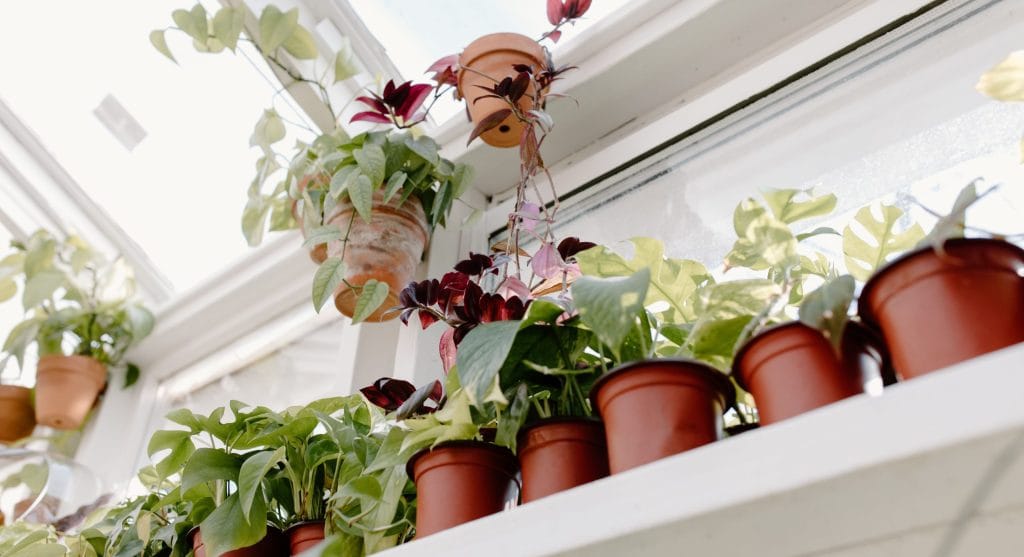
A tropical plant group may include pothos, philodendrons, peace lilies, and prayer plants because they all prefer bright indirect light, evenly moist soil, and moderate to high humidity. A sunny succulent collection might include echeverias, jade plants, haworthias, and string of pearls. These plants thrive with direct sunlight, well-draining soil, and less frequent watering.
For darker parts of the home, grouping snake plants, ZZ plants, and cast iron plants creates a practical low-light collection since they all tolerate lower light levels and require relatively little water. Organizing plants this way also simplifies routine maintenance. Instead of checking scattered pots throughout the house, watering becomes a quicker zone-by-zone task.
Build Displays With Height, Texture, and Contrast
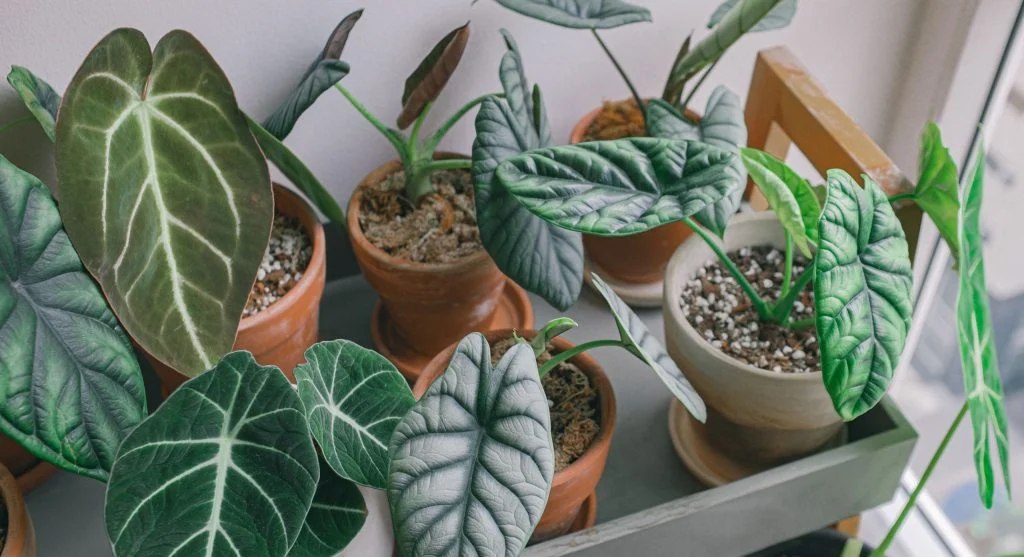
The most attractive indoor plant arrangements use many of the same design principles found in outdoor gardens. Start with one taller plant as the focal point. Plants such as fiddle leaf figs, dracaenas, or taller snake plants provide strong vertical structure. Around the center, place medium-sized plants like pothos, peace lilies, or philodendrons to fill the middle of the display.
Complete the arrangement with trailing plants that spill over shelves or tabletops. Species like tradescantia, pothos, or string of pearls soften the display and add movement. Texture also makes a noticeable difference. Combining broad leaves with narrow foliage or rounded leaf shapes creates more visual interest than using plants with similar appearances throughout.
Adding a few plants with colorful or variegated foliage, including calatheas, crotons, or prayer plants, helps break up solid green displays and naturally draws attention through the arrangement.
Give Plants Enough Space to Stay Healthy
Although grouped plants benefit from being close together, they should not be packed tightly.
Leaving approximately one to two inches between pots allows air to circulate freely around the foliage. Good airflow helps reduce fungal issues and prevents excessive moisture from collecting between leaves.
Spacing also makes routine maintenance easier since every plant remains accessible for watering, pruning, and inspection.
Watch for Pests More Carefully
Grouped plants create excellent growing conditions, but they also make it easier for insects to spread.
If spider mites, mealybugs, aphids, or scale insects appear on one plant, nearby plants can quickly become affected.
For that reason, inspect grouped collections regularly by checking both the upper and underside of leaves. Catching pests early helps prevent the entire display from becoming infested.
Protect Furniture With Shared Trays
A waterproof tray placed beneath a plant grouping offers several practical benefits.
It catches excess water after watering, protects furniture and flooring from moisture damage, and keeps cleanup simple.
A shared tray also visually ties the entire collection together, helping multiple pots feel like one coordinated display instead of separate containers placed randomly.
Create More Depth With Different Heights
Not every pot needs to sit at the same level. Using small plant stands, decorative risers, sturdy overturned pots, or even stacked books beneath selected containers creates layers within the arrangement.
Height variation gives every plant better visibility, prevents smaller plants from disappearing behind larger ones, and allows light to reach more of the collection.
Tiered displays also create a more professional, garden-inspired appearance while making the grouping feel larger and more dynamic.
Frequently Asked Questions
Should all houseplants be grouped together?
No. Plants should only be grouped when they have similar light, watering, and humidity requirements. Plants with very different care needs usually perform better in separate locations.
Does grouping plants really increase humidity?
Yes. When several plants grow close together, their combined transpiration creates a slightly more humid microclimate around the group, which especially benefits tropical species.
How close should grouped plants be?
Keeping about one to two inches between pots provides enough space for airflow while still allowing plants to share humidity.
Can grouped plants spread pests more easily?
Yes. Because plants are close together, insects can move more quickly between them. Regular inspections help catch problems before they spread.
Key Takeaway
Grouping houseplants creates healthier growing conditions while making indoor plant care more efficient. Plants placed together naturally raise local humidity, making them especially beneficial for tropical species that struggle in dry indoor air. Organizing plants by similar care needs simplifies watering, while combining different heights, leaf textures, and foliage colors creates displays with much greater visual impact. Leave enough space for airflow, monitor grouped plants regularly for pests, and use waterproof trays to protect surrounding surfaces. With thoughtful planning, grouped houseplants become healthier, easier to maintain, and far more striking than isolated specimens placed throughout the home.